

By Christian Green, Executive Editor
This is the third story in recognition of the 2026 PSIA-AASI National Award recipients. Members were honored on April 14 at National Academy, at Copper Mountain, Colorado, for their achievements as instructors, leaders, role models, and collaborators in the snowsports industry.
***
Prior to the early 1990s, traditional straight skis had long been the industry standard. But a “parabolic” wave was gathering strength just beyond the horizon. Once it crashed on the slopes of U.S. ski resorts, its impact disrupted tradition and caused apprehension and consternation among many in the ski industry.
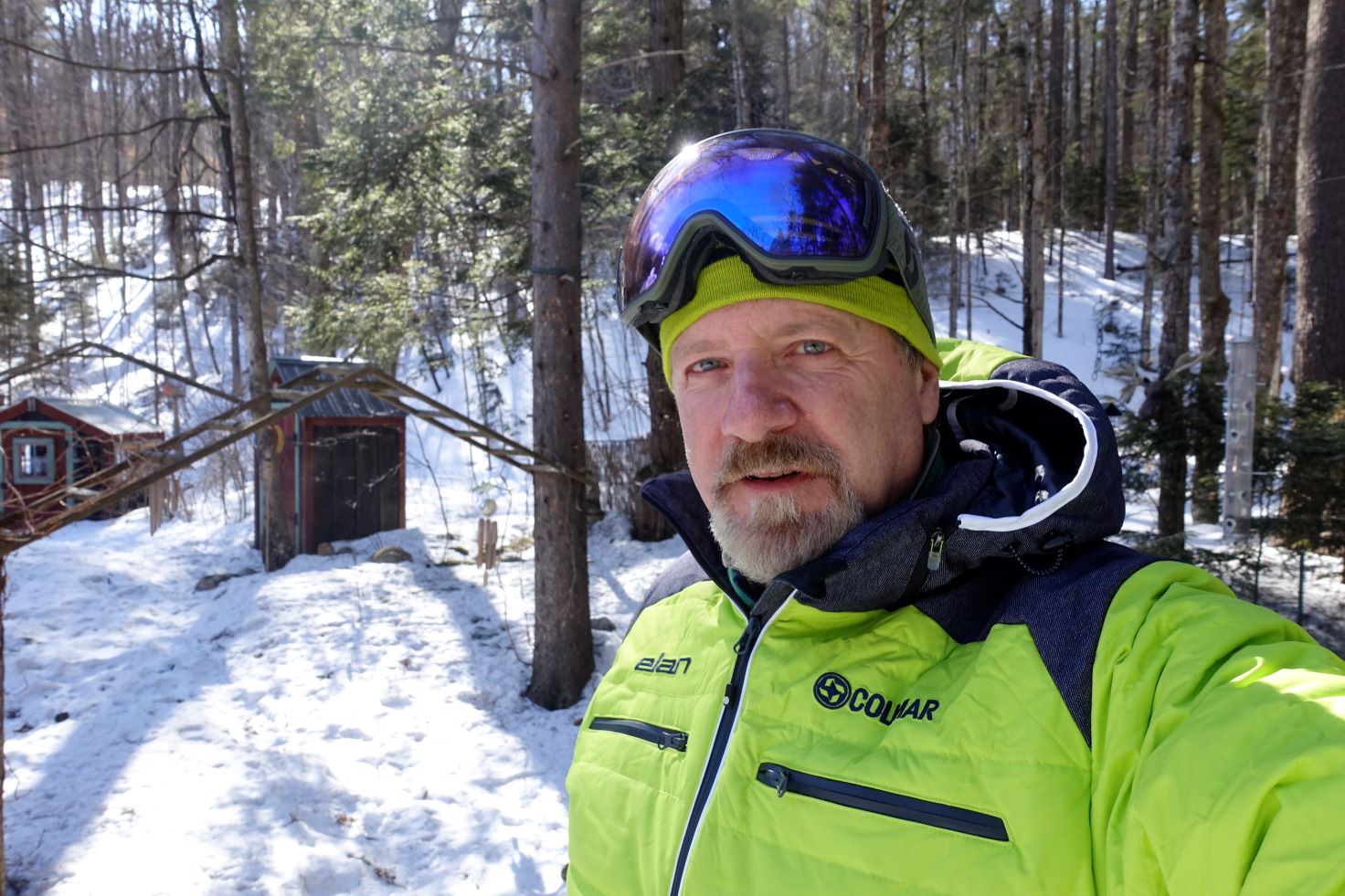
At the forefront of this huge swell was 2026 PSIA-AASI Lifetime Achievement Award recipient Bill Irwin. The story begins at Sugarbush in 1992, where Irwin was the assistant ski school director and a PSIA examiner at the Vermont resort. For several years, he had also been a sponsored mountain rep for the Slovenian ski manufacturer Elan.
“I made frequent visits to Elan’s U.S. ski distribution headquarters, which was in Burlington, Vermont, at the time,” Irwin said of his trips to learn about and review new equipment in person as a rep for Elan. “On one visit I saw some very strange skis in a back room up on a rack. I remembered they looked like Q-tips.”
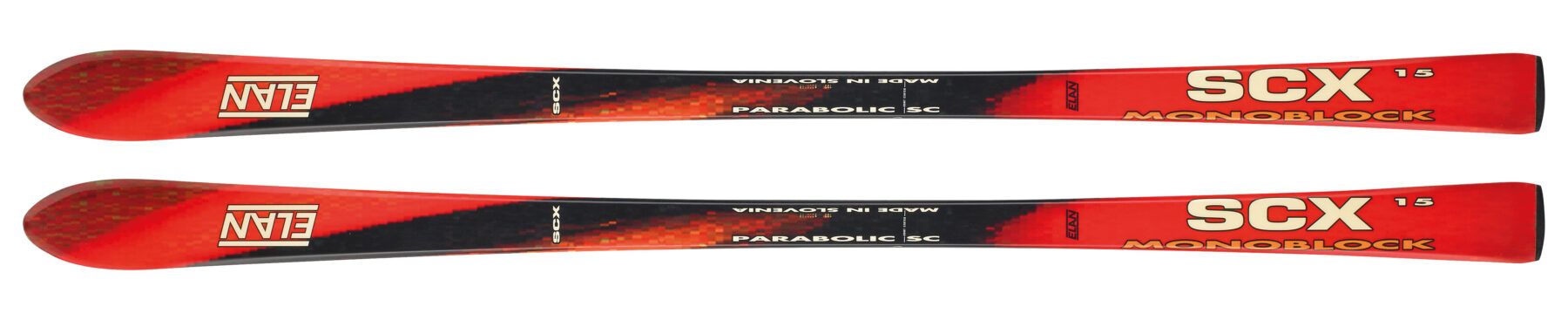
The skis Irwin happened upon were Elan’s SCX, or “sidecut extreme,” developed in 1987 by engineers Jure Franko and Pavel Skofic, who were attempting to design a faster race ski. “The SCX had shape to them, and you could tell how they would perform by looking at them,” Irwin said of the ski that would make it easier for snowsports enthusiasts to initiate and carve turns.
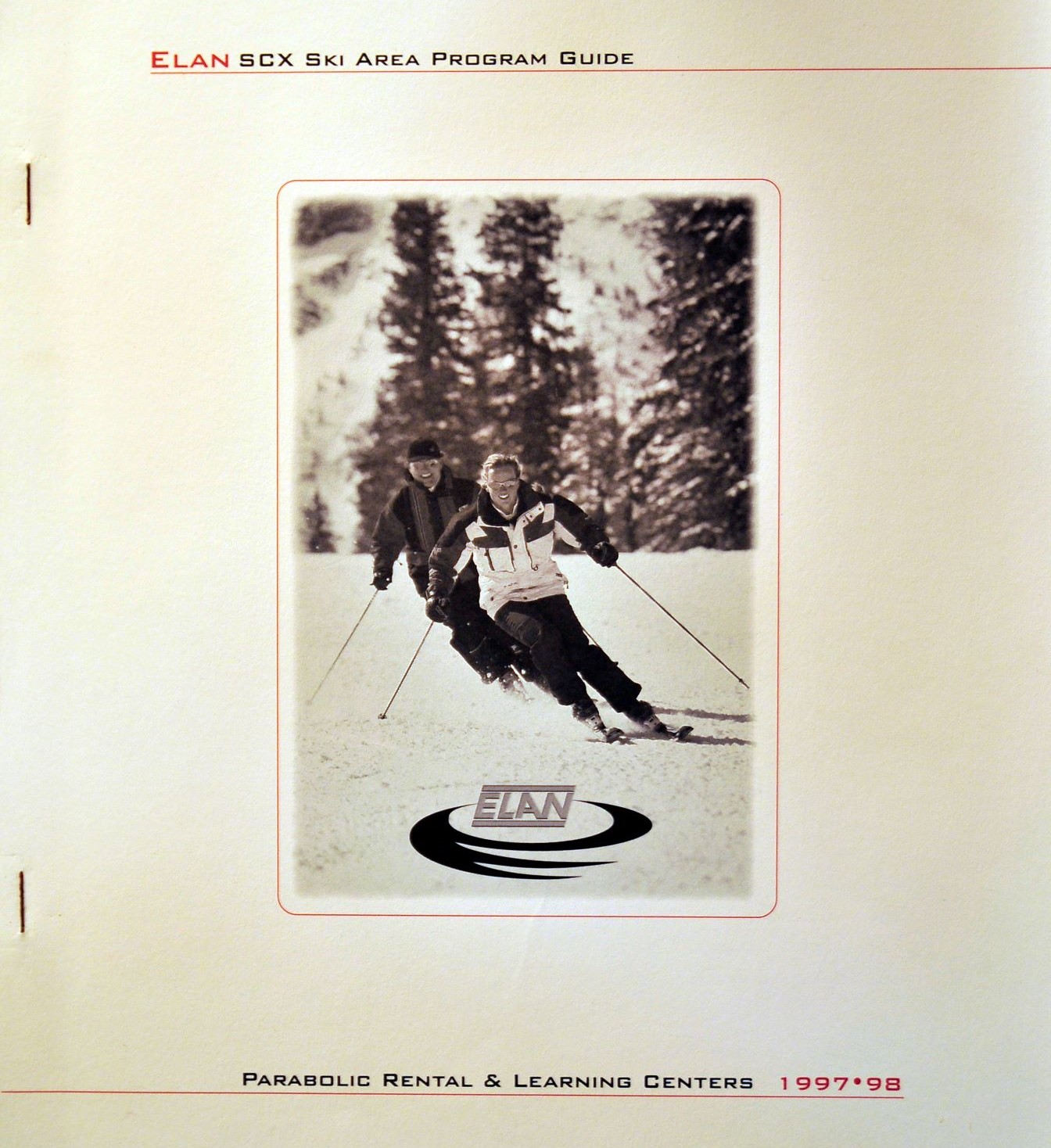
So, at the request of Elan, which had become known for its innovative vision in designing ski equipment, Irwin set up a pilot test program (one of a handful at U.S. ski resorts) at Sugarbush’s ski school. The SCX would be used to teach, race, and most importantly, simply get students on them. For the first iteration, Elan produced 203cm, 193cm, and 183cm length skis.
Irwin shared several reviews on “astounding racecourse results” for instructors and “significant improvements made by intermediate and advanced students” with Elan in 1992. The following year, he was hired full time to administer Elan’s SCX national program.
Shaped Skis’ Impact on Ski Areas, Instructing
The individual responsible for hiring Irwin was Mike Adams, president of Elan-Monark from 1992-96. According to Irwin, Adams had the foresight to start an introductory program for the SCX. However, he needed someone who could effectively communicate with ski school directors and instructors.
“The entire rep staff at Elan were really excited about the way the SCX skied, and that’s an understatement,” Irwin said. “But they couldn’t get dealers, ski shops, and rental shops to buy into the idea. It was too radical.”
Therefore, as soon as Irwin accepted the position as national sales manager for special programs, Adams asked him to start working on a teaching manual blended with PSIA core concepts to help promote the SCX. Adams knew the value of the ski and felt confident that over the next three years, Irwin could also convince instructors and ski areas that the shaped ski was the future of the industry.
“If we could utilize this incredibly powerful tool, we’d be helping skiers learn quicker and easier,” Irwin said of the SCX. “The demand would be such that the rental shops and ski areas would stock the ski, which meant that guests would be exposed to it and would eventually go into retail shops and demand it.”
Generating Excitement for Shaped Skis
Irwin didn’t need three years to make an impact. It took him only two – with no advertising budget, only a travel budget that covered his visits to ski areas around the country. Once he completed the manual, Irwin headed out on the road. “In the first year, I hit more than 50 ski areas,” he said. “Some days I visited two ski areas a day, from California over to Gatlinburg, Tennessee, through the Midwest, New England, and up through the Pacific Northwest.”
Irwin often brought skis with him during his visits or shipped them ahead. He held half-day clinics with the resorts’ top instructors, trainers, and snowsports school directors. “The excitement generated by these visits was one of my favorite times of my life; it was so much fun,” he said. “It was a dream job for a ski teacher; I was in the right place at the right time.”
Yet, generating excitement among ski instructors was only the first step. Irwin also had to educate and develop relationships with the rental shop employees, marketing department, and management at each ski area.
During that first year of travel, his first clinic set the tone for the clinics that followed. When he arrived at Okemo, in Vermont, he was welcomed by a dozen or so instructors whom he fitted with skis. As Irwin noted, most of the instructors were skiing on 203cm or 207cm skis, but the SCX was only 183cm and had a deep side cut to them.
“They thought it was kind of a joke,” Irwin said of when the instructors clicked into their bindings. “So, I didn’t get off to a good start until we got up on the mountain and we started working.”
Once the instructors reached the summit and started skiing, their attitudes changed completely. They recognized that the SCX helped them make high-speed turns at slow speeds. Then, at higher speeds, they were able to carve turns through the entire turn at very high-edge angles. Irwin recalled that the planned half-day clinic turned into a full-day clinic as every instructor was converted by the end of the day, as they saw the advantage the SCX could provide their students.
Although Irwin had his clinic template, not all visits went as smoothly as the one at Okemo.
Instructor Resistance to Shaped Skis
As Irwin related, some of the clinics that followed became heated, as many PSIA certified instructors and examiners, as well as some National Team members, opposed the use of shaped skis because of their perceived threat. “I think many who had achieved their status as instructors, trainers, and directors had done things a certain way with a certain type of equipment,” he said. “The question they often asked was, ‘Should these be allowed at exams and workshop clinics? Wouldn’t that be cheating?’”
For the next two years Irwin did his best to bring instructors into the fold, but it wasn’t easy. “Many were really worried that they would lose their expertise and what they had achieved over many years of instructing,” Irwin noted.
After an arduous stretch of travel during winter 1993-94 and the first half of winter 1994-95, Irwin wanted to lessen his load. So, in late 1994, Elan hired Mike Getzinger, who had been part of the original Elan test program at Sugarbush, as a part-time independent contractor. “He’d go to one area of the country, and I’d go to the other,” Irwin said. “We had a big board in the office where we would keep track of the ski areas, and we hit 150 by the end 1995.”
An Ally in PSIA, Interest from Other Ski Manufacturers
As Irwin was chipping away at the resorts, another important piece of the puzzle came together at the 1995 Snowsports Industries of America Trade Show in Las Vegas. There, Irwin and Getzinger met with PSIA Marketing Director Mark Dorsey, who would go on to become the association’s CEO.
“From a national perspective, working with PSIA National and the National Team became key,” Irwin said. “Dorsey lent a lot of support to the shaped-ski program, and he really felt that this was the future of skiing and that it should be encouraged.”
For the next few years, Dorsey invited Irwin to National Team training so that he could supply the team with skis, ski with them, observe them, and then answer their questions. “At that time, we coined the word parabolic to describe the skis based on the geometry of the side cut, which was a parabolic side cut,” Irwin said. “And parabolic became, at that time, the description of what a shaped ski was . . . It was a unique side cut that made it very balanced for teaching higher-end tasks at slower speeds.”
Other ski manufacturers also began to take notice. In 1995, K2 introduced its own shaped ski after CEO Tim Patrick attended National Team training and observed the SCX ski in action. Over the next four years, every ski manufacturer developed its own shaped ski, and they quickly started changing their production to the new shaped sidecut.
In 1996, another event demonstrated the power of the shaped ski. Snow Country magazine set up a competition in Snowmass, Colorado, pitting two groups of skiers of equal ability who were visiting the resort that week. One group, coached by Snowmass Ski School Director Victor Gerdin, skied on traditional straight skis through a racecourse. The other, coached by Snowmass instructor Mike Bridgewater, skied on the SCX skis. The competitors were initially timed on their own skies, coached for three hours a day, and at the end of the week, each group was timed on the straight skis or the shaped skis.
“The guests who were competing felt like celebrities,” Irwin said. “That test, when it was published, became a crucial turning point in the acceptance of shaped skis because at the end of the test, the group on the SCX skis were beating the conventional ski team by half a minute.”
Shaped Skis’ Impact on Rental Equipment, Beginner Programs
One of Irwin’s motivations for advocating for shaped skis was the role rental shops played in helping to convert beginners into lifelong skiers. “I always found it fascinating that we were teaching our guests and using such awful equipment that wasn’t really designed for the task,” he said. “Rental skis were rarely or never tuned by the ski areas and boots were even worse than the skis.”
For this reason, Irwin convinced Elan to develop a beginner ski for adults. Shorter skis weren’t a new concept; in fact, in the early 1970s, the Graduated Length Method (GLM) had been used at resorts such as New York’s Snow Ridge, where Irwin learned to ski, to accelerate learning. However, it was argued that GLM could lead to poor habits, such as improper weight distribution or inefficient turning techniques (due to a “heel push”). In addition, product quality was lacking in GLM short skis, which made them hard to manage.
Irwin also got the backing of Les Otten, the CEO of American Skiing Company, which had patented GLM and used it at other resorts the company owned. Otten felt that GLM could be reintroduced successfully on short, shaped skis because the deeper side cut would improve performance.
“We started testing at the American Skiing Company ski schools and came up with three sizes: a 113cm, a 123cm, and a 133cm ski for adults,” Irwin said. “Everyone, regardless of size or weight, would start skiing on one of those three sizes.”
In the end, the 123cm worked best for students, who started at that length and progressed up. According to Irwin, the “learning curve was astounding” and Rossignol, then Head, joined Elan in producing short shaped beginner skis for adults.
Learn-to-Ski Centers
Beginner skis prompted another innovation at resorts – learn-to-ski centers, which were separate rental shops and ski school centers for new skiers. “The owner of Jiminy Peak [in Massachusetts], Brian Fairbank, along with American Skiing Company resorts, were the first to open learn-to-ski centers,” Irwin said. “They were separate from standard rental shops, where beginners were treated like royalty.”
Moreover, Michael Berry, president of the National Ski Areas Association at the time, started a beginners’ initiative across the country. “At all the NSAA shows, the conversion (return) rate for beginner skiers was emphasized,” Irwin said, adding that the learn-to-ski centers worked in tandem with NSAA’s initiative to bring beginners back to the mountain.
The final component of the plan was to design shorter shaped skis for kids, as Elan’s first pairs ran in 10cm increments, from 70cm to 150cm, based on weight and ability level. As before, many instructors were skeptical. “The idea of putting shaped skis on kids terrified some instructors,” Irwin said. “They thought kids would be skiing off into the woods, bashing into trees, and going off cliffs.”
As with the adult shaped skis, Irwin noted there was a lot of work to be done, setting the stage for additional clinics and the enlistment of children’s specialist instructors to help promote the children’s shaped ski. In 2007, Elan partnered to form a joint distributorship with Dalbello and became Dalbello/Elan. Dalbello had already invested in new molds and had started producing high-quality rental ski boots for the rental market. The strategy was to manufacture a full-size run of four-buckle adult boots with only four color-coded sole lengths. This made it more convenient for rental shops to mount and set up skis for guests, ensuring rental lines moved faster.
“This was called the four-factor system,” Irwin expressed. “Clint Lyon, the new president of Dalbello/Elan, had already developed the boot, and I just helped him refine it and put it to market.”
This essentially changed the boot system in rental shops, Irwin asserted, adding that students used equipment from these shops in more than 75 percent of the lessons instructors taught. “How that equipment skied played a huge part in how successful the lesson format was,” Irwin said.
Performance Demo Ski Centers
During this time, Irwin also showcased shaped skis and boots at outdoor retail shows, snowsports association events, and national ski writers conferences – the latter, so writers could help promote their advantages. Collectively, this prompted rental shops to focus more on performance and establish performance demo ski centers at resorts.
“Ski areas started to buy higher-end tuning machines to service the new equipment, and significantly better boots were designed and placed in rental shops,” Irwin said. “Today, a skier can go to virtually any ski shop or rental shop and get a ski or a boot specifically tailored to their ability level.”
In many cases, these performance centers and rental shops became the second-most profitable area for resorts behind ticket sales. “You now had access to high-performance equipment and even basic rentals that paired good skis with good boots,” Irwin said. “That didn’t exist when we started; it’s an offshoot of all this.”
As Irwin contended, the shaped-ski phenomenon would not have been possible without the help of PSIA. He insists that PSIA gave him the training and communication skills that helped him demonstrate the value of shaped skis during the clinics he ran for trainers and directors at more than 150 ski resorts throughout the United States.
“It was PSIA instructors who introduced shaped skis to the United States long before any other country, because they understood their significance and their importance to the future of the sport,” Irwin said.
For Irwin and many others, it stands to reason that the shaped ski phenomenon went a long way in helping to make the sport we all love more accessible and sustainable.
***
In addition to Irwin, two former PSIA-AASI members were honored with this year’s Lifetime Achievement Award:
- Max Lundberg, PSIA Demonstration Team member, serving as chief demonstrator for the first U.S. Interski Team in 1968, captain of the U.S. Interski Team in 1971, and coach of the PSIA National Team from 1973 to 1978. In addition, he served as PSIA Director of Education from 1986 to 1995, president and vice president of the Intermountain Region, and editor and manager of the Professional Skier, as well as the author and editor of several works focused on leadership and the psychology of achievement.
- Stu Campbell (posthumously), PSIA Demonstration Team member, co-chairman of the PSIA Technical Committee, and PSIA Eastern Region examiner. In addition, he authored several books on ski technique and served as technical and instruction editor at SKI magazine from the mid-1970s until his passing in 2008. He was inducted into the U.S. Ski & Snowboard Hall of Fame in 2009.