

By Mark Aiken
This is an excerpt from a feature published in the Spring 2026 Issue of 32 Degrees. To access the full issue, click here.
Did you know that flat, two-dimensional world maps are quite different than three-dimensional globes? To explain this concept to his middle school students, Danish schoolteacher Tue Rabenhøj broke students into groups of three and gave each group an orange and some markers. The task: draw the globe on your orange, then peel the orange to lay the map flat on the table.
Rabenhøj was clearly channeling his inner snowsports professional and leveraging the teaching fundamental “Promote play, experimentation, and exploration.” Chaos, confusion, laughter, frustration, chatter, and – eventually – focus broke out as students embarked on their mapping project, consulting globes and atlases, clarifying the assignment, outlining continents on their oranges, removing the peels (with varying levels of success), and observing the surprising differences between the globe and the flat 2-D representation.
Keith Rodney, PSIA-AASI National Team member and chair of the National Children’s Task Force, says that he challenges students similarly in his telemark lessons (albeit not with maps, markers, or – we can probably assume – fruit). “Give them a desired outcome, then let them figure out how to get there,” Rodney said. The learning outcome is important, but the process of getting there may be even more valuable.
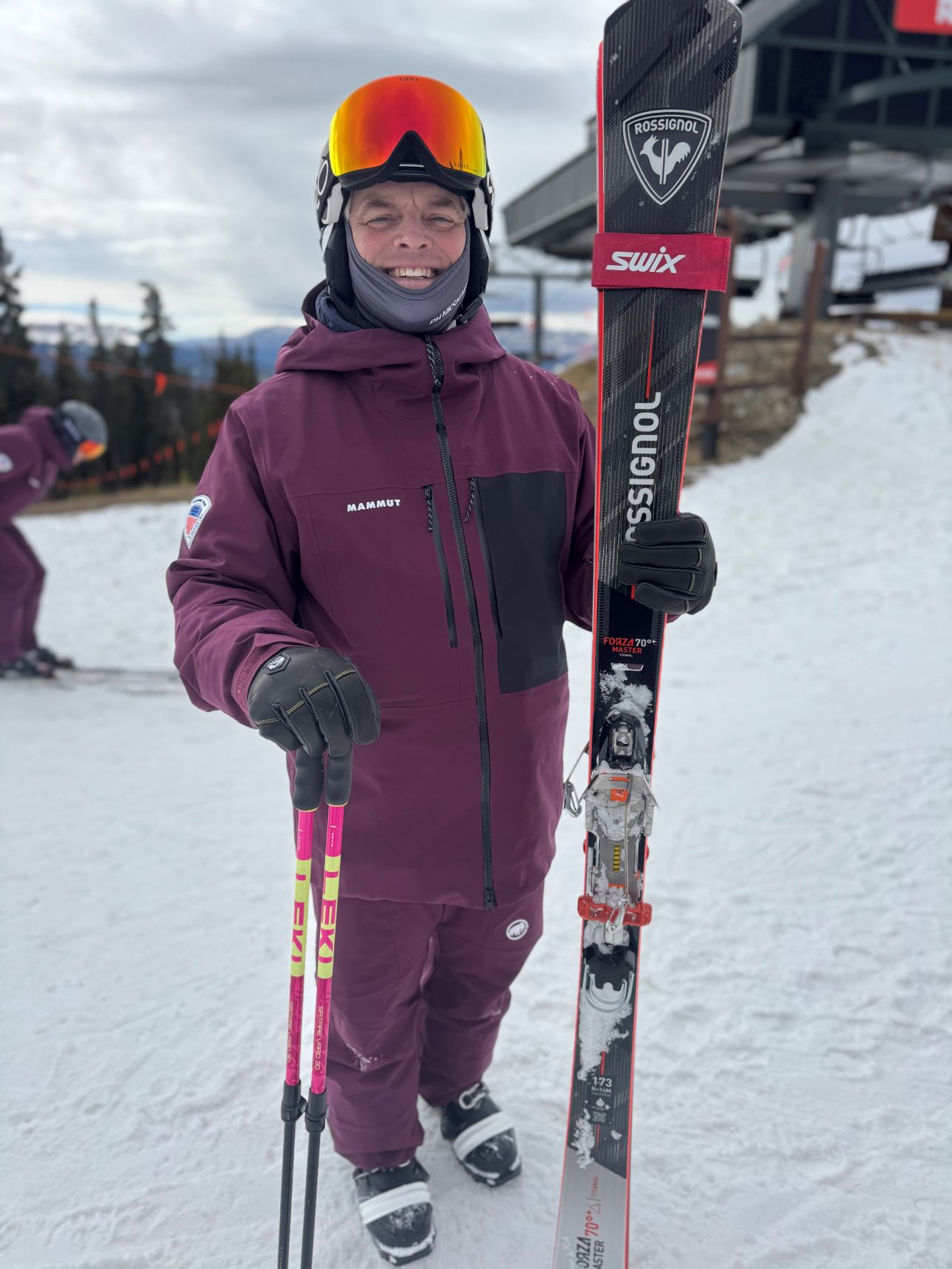
outcome may be even more valuable than achieving that outcome. Photo: PSIA-AASI.
I spoke with Rodney and other professional educators outside the snowsports sphere to better understand ways to leverage the “Promote play, experimentation, and exploration” fundamental. Rodney uses a playful disposition and boundless enthusiasm to guide students in skill acquisition. Kay Peterson has studied and implemented experimentation and exploration in learning as co-founder of the Experiential Learning Institute with David Kolb. Jen Oxman Ryan is a senior researcher at Project Zero, a research center based at Harvard Graduate School of Education that spent a decade in schools worldwide studying play in classrooms. I met with these three experts to gain better understanding of how to set up environments in which play, experimentation, and exploration can help instructors and students engage, improve, and ultimately grow in snowsports lessons.
The Many Definitions of Play
Harvard’s Ryan and her Project Zero colleagues detailed the scene in Rabenhøj’s classroom in a paper “Toward a Pedagogy of Play” as they worked toward publishing their book Pedagogy of Play, the culmination of a decade of research. The book acknowledges that play is a word with many meanings – for example, playing with games or toys (which may be the definition instructors naturally gravitate toward); teasing (a definition we should be aware of because it can have negative connotations); and acting in a show (which instructors can leverage in role-playing and pretending). “Our work, rather than defining play, was to figure out what it means to bring play into a classroom or learning setting,” Ryan said.
Therefore, Ryan stressed the importance of educators adopting a playful mindset for themselves to keep teaching fresh and engaging. For example, an instructor is teaching novice skiers to climb up a bunny hill in the beginner area. The instructor demonstrates the herringbone, side stepping, and option three, taking off equipment and walking up. The conventional approach is that the instructor demonstrates the techniques, and the students practice the techniques.
Here, however, the instructor chooses unconventional and explains to students an experimental idea he or she wants to try. Students split into small groups or partners to experiment with an approach to going up the hill: Group 1 ascends by side stepping, Group 2 tries to climb using the herringbone, and Group 3 takes off their skis and carries them up. If someone in a group has trouble, other group members help them. Afterwards, the groups come together and talk about what worked and what didn’t. The role of the instructor changes in this scenario to facilitator (bouncing from group to group, observing, interjecting, and making suggestions), teammate (“let’s try something together”), and – possibly – fellow student, as it’s likely the instructor learns something new in this scenario.
In the end, Group 1 decides their side-stepping method is effective, but long climbs become tedious. Group 2 likes the herringbone but finds steeper pitches challenging. Group 3 has no problem walking uphill, but they don’t like taking off their equipment and carrying it. Afterwards, all participants try all the methods, using the wisdom of their peers.
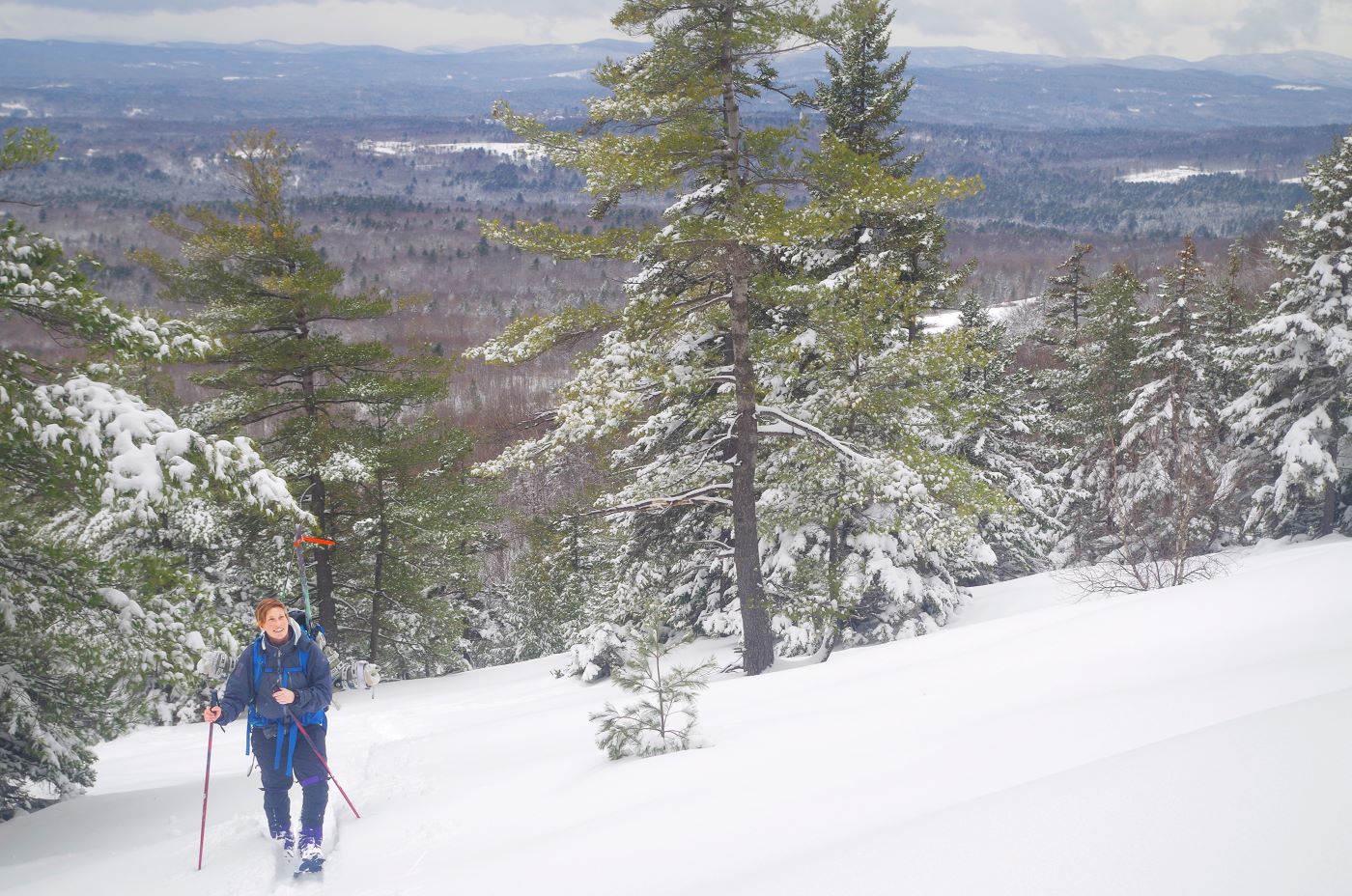
or learning setting. Photo: Tom Fisher.
“The idea of co-creation or co-designing is powerful,” Ryan said. “Bringing them into the experience gives them the sense that they share the ability to shape their learning and that they have some say.” The theme becomes, “let’s try something together.”
“I don’t ever give them the answer,” Rodney added. “I like a good setup, and I tend to shy away from the idea that there’s just one ‘right’ way.”
Read the rest of the feature here.