This article appeared in the recently published Fall 2026 Issue of 32 Degrees. Access the full issuehere.
***
By Dave Schuiling, PSIA-AASI Director of Education and Credentialing
Consistency. Collaboration. Credibility. This season marks an important milestone for PSIA-AASI.
We’ve been working on overall consistency, and this season the education and credentialing pathways are launching with a significantly greater level of national alignment.
Behind that simple statement is years of work, countless conversations, hundreds of volunteer and staff hours, and an enormous amount of trust and collaboration across our eight regions and the national organization.
It is worth taking a moment to recognize what we have accomplished – and, more importantly, what it makes possible for our members and the profession of snowsports education.
Much More Than Certification
When we talk about strategic education alignment, it is easy to assume that the primary goal has been to make the certification process more consistent. That is certainly part of the work. But it is not the whole story.
The larger vision is a connected education, professional development, and credentialing system that gives members greater consistency and clarity throughout their learning journey. Education, professional development, and credentialing are interconnected parts of how professionals develop their knowledge, skills, and expertise.
Strategic alignment allows us to bring these pieces together. It means a member can engage with nationally aligned education and resources, develop their skills through professional development, and demonstrate those skills through a more consistent credentialing process. The goal is to create a better experience and clearer pathway for members – and, ultimately, to strengthen the quality and credibility of our profession.
“The larger vision is a connected education, professional development, and credentialing system that gives members greater consistency and clarity throughout their learning journey.”
A More Consistent Experience for Members
For years, our regions have done an incredible job developing education, training, and assessment resources for their members. That regional expertise is one of our greatest strengths.
At the same time, our geographic size and organizational structure have made national consistency extraordinarily challenging. PSIA-AASI is made up of eight regions, each with its own board and leadership, working alongside a national office and national board.
Creating greater alignment across that structure requires dialogue. It requires compromise. It requires listening to different perspectives and recognizing what works in different parts of the country. Most of all, it requires trust. That is why the progress we are making is so significant.
What Members Will See This Season
The alpine and snowboard alignment launch is an important milestone toward a more unified member experience, but there’s more to come. Following closely behind are telemark, cross country, children’s specialist, freestyle specialist, and adaptive. It is the foundation for what comes next.
Performance Guides that provide a common foundation for technical development
National Activities Lists that support consistent learning and training
Assessment Guides that clarify expectations and create greater consistency in how learning outcomes are evaluated
Updated assessment processes and tools designed to better connect learning, development, and credentialing
Assessment Forms 2.0, a significant advancement in how we collect and use assessment information.
Together, these resources create a common language for education and development across the country. A member in one region should be able to recognize the learning outcomes, terminology, and expectations of a member in another region. An education leader should be able to build training around shared national resources. An examiner should have clearer tools for evaluating performance. And the association should be able to learn from the collective experience of its members. That is the power of alignment.
Turning Assessment into Learning Data
One of the most significant developments for this season is the rollout of Assessment Forms 2.0. Historically, assessment information has largely served an individual purpose: documenting whether a candidate passed or did not pass in an assessment module. We are now building the ability to do much more.
Assessment Forms 2.0 will allow us to analyze assessment information at the assessment-criteria level. This gives PSIA-AASI an opportunity to understand much more precisely how members are progressing through the learning outcomes. Where are candidates consistently demonstrating strength? Where are they struggling? Are there assessment criteria in which additional education or professional development could help members become more successful? Are there trends across disciplines or regions?
This information can help us move from simply assessing learning to understanding learning. Over time, this data can inform education and professional development resources so that we can better support members where they need it most. This is a significant shift. We are creating the opportunity to use assessment as a feedback loop for the entire education system.
Learn. Practice. Assess. Analyze. Improve. That is what a connected system can make possible.
Building Skills Beyond the Slopes
There is another important part of this work that may not always be immediately visible. The skills members develop through PSIA-AASI education are not limited to skiing or snowboarding.
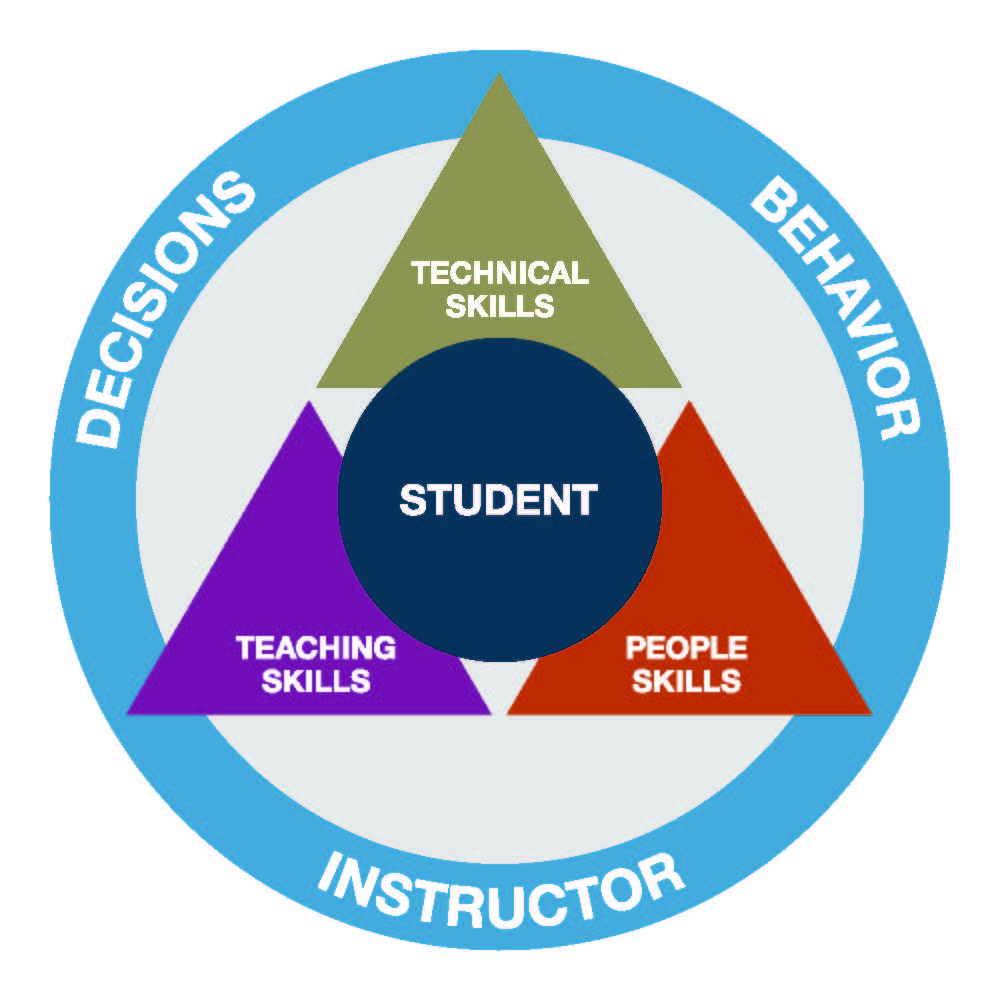
Our Learning ConnectionSM framework has long recognized the importance of People Skills, Teaching Skills, and Technical Skills. As members progress through their professional development, they are building skills such as communication, observation, feedback, problem-solving, collaboration, adaptability, leadership, and decision-making. Those skills are transferable. They can support a member’s progression from instructor to trainer, supervisor, manager, education leader, or resort leader. They can also carry well beyond the snowsports industry into other professional pathways.
This is one of the opportunities created by a more connected education system: We can become more intentional about helping members recognize how the skills they learn can serve them throughout their careers. A credential can demonstrate what you have achieved. The learning journey helps shape who you become as a professional.
This Didn’t Happen by Accident
With eight regions, eight regional boards, regional leadership teams, a national office, and a national board, there are many perspectives, priorities, and ways of doing things. There have been difficult conversations. There have been different opinions.
There have been moments when the idea of achieving meaningful national alignment seemed “unachievable.” But people kept working together. Volunteer task force members gave their time, expertise, and energy. Education leaders from across the country contributed ideas and challenged assumptions. Regional and national staff worked through countless details. Leaders listened, adapted, and found common ground. This is what collaboration looks like. It is not the absence of differences. It is the willingness to work through those differences toward something bigger than any one region or individual. And that deserves to be celebrated.
A Milestone – And a Beginning
As our education, professional development, and credentialing systems become more connected, we have an opportunity to continue improving the member experience, strengthening our credentials, using data to inform learning, and demonstrating the value of professional snowsports instruction. Greater consistency gives us greater ability to work together. Greater collaboration gives us greater ability to learn from one another.
And greater alignment gives us a stronger platform from which to advocate for the value and credibility of professional snowsports education. That is what makes this moment bigger than a certification update.
We are building a more connected professional education system for 33,000+ members across the country. And we are doing it together.
Thank You to Those Who Made This Possible
A massive shout-out goes to the volunteer task force members, regional education leaders, examiners, educators, staff, and organizational leaders who have contributed to this work. Your time, expertise, patience, and willingness to collaborate have made something possible that many once thought would be too difficult, given the size and structure of our association. This work belongs to all of you. And ultimately, it belongs to our members.
Every resource we align, every assessment we improve, every learning opportunity we create, and every conversation we have about professional development is about helping our members become better instructors, educators, and leaders. It is about strengthening the association we all share and advancing the profession of teaching on snow, something we are all proud to be part of.