

By Katherine Fuller, PSIA-AASI Director of Marketing and Communications
It was my first snowsports lesson in nearly a decade. Not teaching—participating.
On the second lift ride of the first day, after Eldora Mountain’s instructors observed and sorted the 40 or so women attending its five-week intermediate lesson program, I felt an overwhelming sense of calm wash over my body. That is notable for me, someone with gripping acrophobia who usually buries her face behind a Buff on lift rides to hide the (panicked) deep breathing. Yet there I was, floating through the air feeling oddly relaxed.
For years, I have been chased by the shadow of mediocrity on the hill. I started working in snowsports industry marketing in 2019, but I did not grow up on or anywhere near snow. Instead, I learned to snowboard in my 20s and ski in my 30s.
I went on to only ever ski with people far more talented and faster than I, and over time the constant comparison I subjected myself to wrecked my confidence. I quickly plateaued, entrenched bad habits, and found myself skiing with fear and doubt. And I couldn’t just be an anonymous, trepidatious, intermediate skier. Being a less-than-expert skier working at a ski area meant I never felt that I belonged. I loved the job but felt like a fraud.
Needless to say, I did not tell anyone in the lesson program that I work for PSIA-AASI (I also paid for it, myself). In that group, I was simply a random person with a vague marketing job too boring to discuss, committed to improving “just because.”
And since I was grouped with similarly skilled skiers, I found myself—for the first time—on a mountain with peers. I never could have anticipated what a huge relief that turned out to be.
Over the next 15 hours spread across five days, I would not need to prove anything. I would not need to manage my own fear, my own expectations, and my own improvement alone. I could hand some of that over to a professional instructor and be present enough to learn.
I could think of no finer way to spend a Wednesday morning.
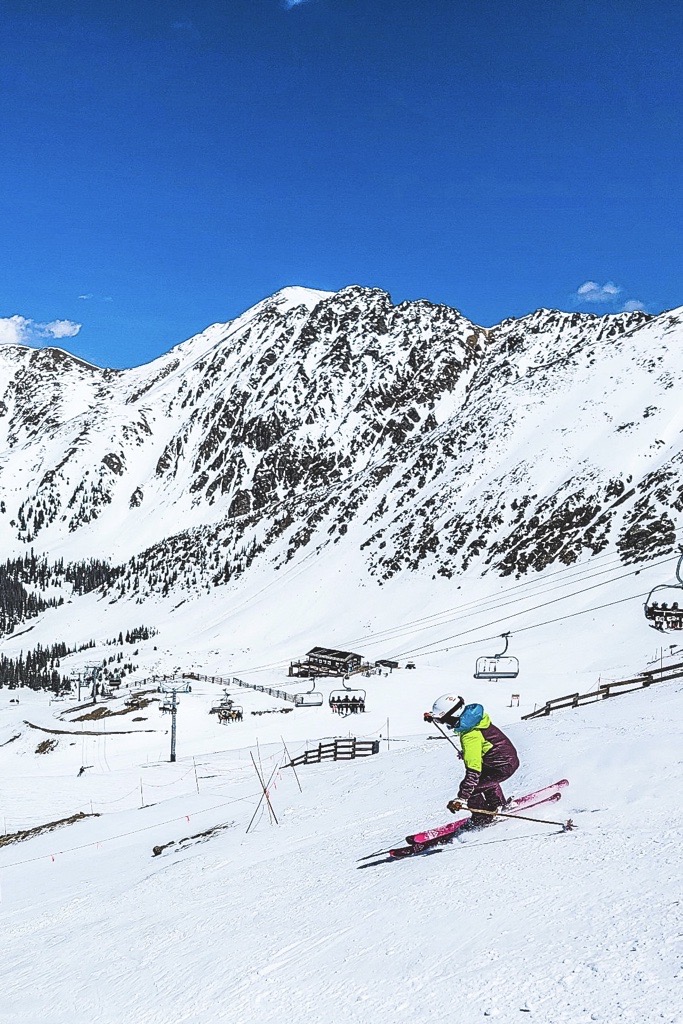
My Aha Moment
Halfway through the program, one tap of a ski pole and three words were all it took to completely transform my skiing.
My instructor was a 26-year-old Alpine Level II, youth freestyle coach, graduate student, fiction author, and an extremely patient human named Lindsey. She led my little pod of five that had been deemed “intermediate plus”: four with respectable technique and speed and then … me. I was the fastest in the group but also the most squirrely.
There was not much to say about my form, which has historically crumbled at the first sight of ice because, yes, I am the prototypical spoiled Rocky Mountain skier. Depending on what side of the bed I woke up on (or who knows what else), I would spend my ski days fighting to not be frozen by fear, or just wanting to go rather than move methodically through proper motions.
I knew my skiing needed work; I just didn’t know what, exactly.
On day three, Lindsey lined us up along the side of a groomer and doled out individual instructions. She tapped my boot with her pole and said, “Widen your stance.”
“Huh?”
“Widen your stance.”
On to the next person.
As my entire approach to the lesson program was to abandon my ego and any and all preconceived notions and simply listen-ski-repeat, I tamped down my instinct to ask a bunch of questions and did as I was told. I widened my stance.
The first two turns felt awkward and then, for the first time perhaps ever, I felt stable. I felt in control. I pushed harder and tasted the elusive flow state—that meditative trance that mountain biking taught me to love and to crave. I admittedly thought I’d never be good enough to find it on skis.
Later, when I was not in a position to get lost in details, Lindsey explained why she made the suggestion, and how it had built on the previous lessons. For example, I wasn’t giving myself enough space to fully tip onto the edges of my 90mm-underfoot skis (considered somewhat narrow by many at the ski area where I used to work). Widening my stance in that moment changed my skiing.
It was awesome.
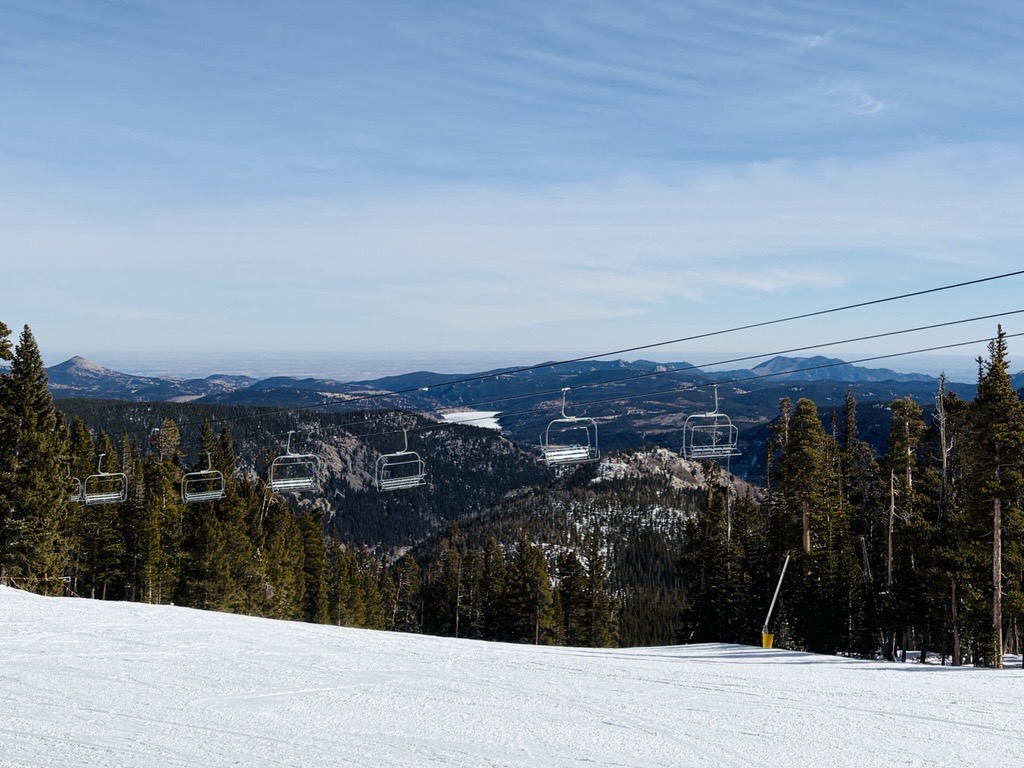
A Certified Instructor Makes a Difference
After the program wrapped up, I cracked open our reference materials out of curiosity (I should clarify that I’m not an instructor, if that is not already obvious.) How much of Lindsey’s teaching technique could I readily identify?
All of it, as it turned out. Lindsey proved her high level of skill in homing in on exactly the right one or two tips for each of us at the right moments, giving us as much or as little explanation as was helpful, and encouraging us to play and experiment with our new pieces of knowledge.
The PSIA-AASI Teaching Skills fundamentals are:
- Collaborate on long-term goals and short-term objectives.
- Manage information, activities, terrain selection, and pacing.
- Promote play, experimentation, and exploration.
- Facilitate the learner’s ability to reflect upon experiences and sensations.
- Adapt to the changing needs of the learner.
- Manage emotional and physical risk.
What struck me most was how little Lindsey talked at us, and how much she encouraged us to talk to each other, especially on the lift rides where she prompted us with simple discussion topics. Every piece of feedback she gave directly was targeted and productive. No pontificating; no over-explaining—it kept us moving as much as possible.
And not all of it had to do with pure technical skiing, which she spent very little time talking about (but demonstrated beautifully). So much of her success was in her ability to reduce uncertainty and fear and instill confidence, allowing us to be more open to what we were learning.
For example, she quickly found that we could all relate to yoga references and used them to train us to be more observant of and in tune with our bodies and our positions in space. Admittedly, that was not quite what I expected for the first lesson, but it was another breakthrough. I have started every ski day since with a body scan to get my core and hips set.
Remarkably, for all of the information I did ultimately absorb, Lindsey would sometimes gently refuse to explain something in-depth even when asked. That made a few participants anxious at first, but she was saving us from ourselves. Giving us one tip to work on and then piling on a bunch of extraneous, distracting details was going to mean we couldn’t focus on what we were supposed to be practicing.
One of the most unexpectedly helpful things Lindsey offered us—particularly in a season when Colorado experienced less-than-stellar snow conditions—was constantly narrating her terrain choices.
You could feel every single person in the group relax a little when she said things like, “I checked with patrol this morning and X run is thin and icy after grooming, so we’re going to skip it today.” She knew the mountain so well that she could tell us what side of each run to explore, depending on what kind of conditions we wanted to experience. We always knew what to expect prior to dropping in somewhere new.
I never would have thought to request it, but not having to think about whether we were headed into terrain appropriate for our skill level and preferences was a huge weight lifted off our minds. We didn’t need freedom of choice in those moments; we needed a competent guide looking out for us.
A New Relationship with Skiing
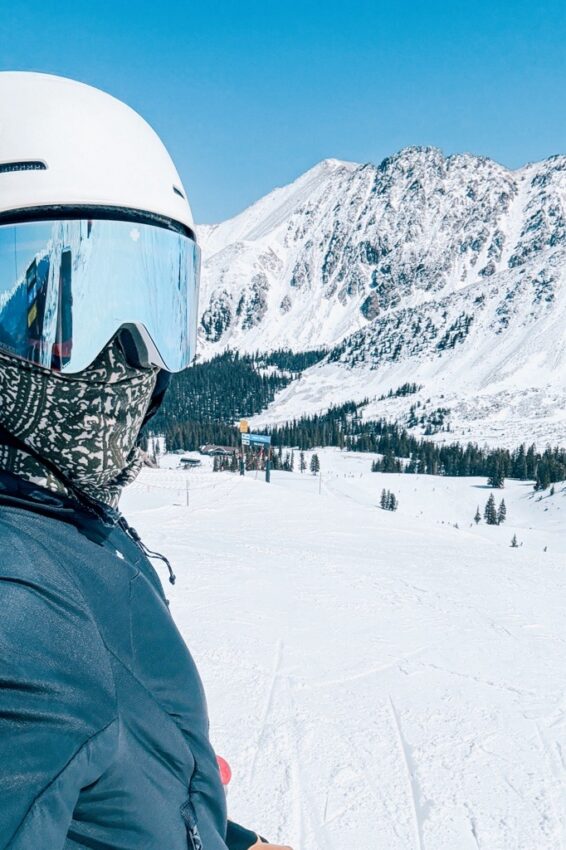
Guests may say “thank you” at the end of a lesson. They may say they had fun, or that something finally clicked, or that they want to return. But I’ve been told that instructors rarely get detailed feedback.
I went into the lesson program wanting to be “better,” but I didn’t know what that meant. Truthfully, I felt a deep sense of desperation; I “needed” to get better because I was tired of being a middling skier who works in the ski industry.
I grew up playing semi-competitive softball and soccer and expected the lesson structure to resemble a practice focused on technical drills—all orange cones and nuanced maneuvers and constant feedback from the coach. Instead, it was more like a scrimmage: Here are a couple of pointers to keep in mind, now get out there and simulate the real thing.
For me, it was not actually just the stance adjustment, though that changed my skiing immediately. It was the way Lindsey helped me develop a combined foundation of both trust and technical skills that enabled me to go for it.
After five classes, what I left with was a different relationship with skiing, which is even more valuable than being able to check some skill boxes. For an intermediate, 40-year-old skier carrying years of fear and self-consciousness, one well-timed cue that fit perfectly into a bigger picture, given by a skilled instructor, did more than improve my turns.
What I got was access to feelings I had been chasing for years, particularly the sense that I belong on skis.
And, I started having way more fun.
A month later, during National Academy at Copper Mountain, I skied with a couple board members down a run on which I’ve experienced unpleasant and unpredictable conditions. With my newfound, grounded-in-reality confidence, I trusted myself to handle it. Luckily, the snow was better than it looked, with just the right amount of grip to really give it.
So, I flew. I felt free. I loved it.
Near the bottom, one board member looked up at me and yelled, “Oh! You’re a giggler!” Apparently, I’d been laughing the whole way down, and he—a longtime instructor and ski resort executive—was beaming, deeply pleased by my expression of joy.
I felt like I belonged.
A week after Academy, I went back to the ski area where I used to work. Because it was late spring, very little terrain was available, but, crucially, a run I had long feared was still open. So, I skied it. My first thought at the top was, “Oh, this IS steep.” And then I just did it.
I want you to know how not like me that is, and therefore how much good instruction can transform a person. Even if you cannot comprehend a student’s fears on the mountain, they are still very real. They still have to be addressed.
Lindsey nailed it. Her compassion wasn’t gushing and saccharine. Nor did she dismiss me with exhortations that I had nothing to be afraid of. She simply accepted me and my situation and worked with it. When that work is done well, it goes beyond teaching someone how to make good turns; it changes their whole perspective.
Thanks, Lindsey.