

This is an excerpt of a feature published in the Winter 2026 Issue of 32 Degrees. You can access the full feature here.
When a 21-year-old Ted Ligety pushed out of the starting gate for the second run of slalom in the men’s combined at the 2006 Olympics in Turin, Italy, it was clear that he had something special. The announcers were astounded at the extent of how he could lay his skis on edge and the angles that he created, as he arced, turn after turn, into first place, and ultimately, into history as a gold medalist. Weeks later, Ligety won his first World Cup event in giant slalom (GS), the first in a long career composed of 24 GS wins, a second gold medal for GS in the 2014 Sochi (Russia) Olympics, and five World Cup GS Championship titles, earning him the nickname, “Mr. GS.”
It’s one thing to watch the videos of Ligety from his 14-year career on the U.S. Ski Team, or one of his frequent Instagram posts, but to see him ski in person is thrilling. At least it was for Kevin Jordan, PSIA Alpine Team member and children’s program supervisor at Aspen Snowmass Ski and Snowboard School. “What was interesting to me was that Ted would literally fall down as he approached the rollers,” said Jordan. “Think of a hard boot carving snowboarder who lays it over. When they are on their toeside edge, they can be so inclined that it looks like they are falling on the snow. This is what Ted did.” Amazed, Jordan remarked to Ligety about how he dragged his hips over the rollers. “Ted basically said, ‘You’ve got to. It is the only way I can stand back up,’” mused Jordan.
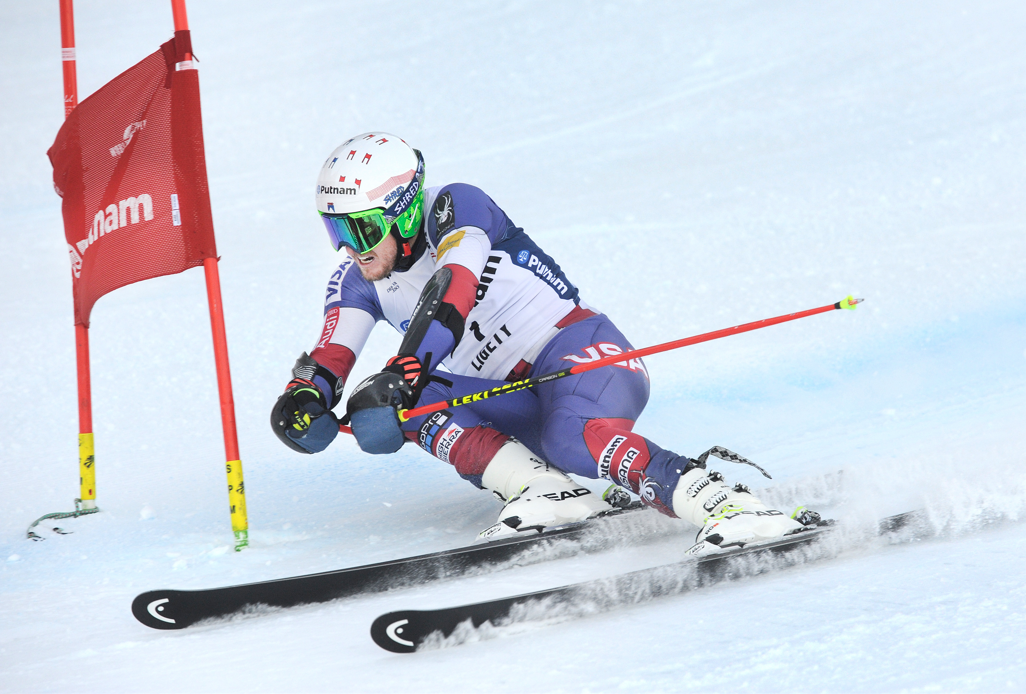
To watch Ligety arc a turn as Jordan did, is to watch in awe someone who has mastered a skill that not many people can replicate. So, what is it that sets Ligety apart from other skiers? “He could carve a clean turn better than any other athlete I’ve worked with,” said Sasha Rearick, PSIA-certified Level III alpine instructor and former head coach of the U.S. Men’s Alpine Team during Ligety’s tenure. “Seeing him redefine GS was amazing. He was incredibly creative in how he approached the line – finding a way to ski on a clean edge while being direct and fast. Some athletes skied a clean line but were too round; others were too direct and too early. Ted found this perfect balance where he could express himself freely on a clean, powerful edge.”
When we consider the concept of real versus ideal, some would hold a ski racer like Ligety up as their ideal or desired technique to aspire to. But is it realistic to compare our performance, or our students’ performance, to Mr. GS? It seems inconceivable to some to even ski at the speeds Ligety is comfortable with, let alone get the high edge angles that he does. Aside from being astonished at his athleticism, however, there are some takeaways that instructors can glean from watching Ligety. With the help of PSIA Alpine Team member Joshua Fogg, Rearick, and Ligety himself, we dive into the mechanics of Ligety’s gold medal turns to consider what we can learn from him, and even what we can share with our students.
AN INSTRUCTOR’S TAKE
Joshua Fogg is a PSIA Alpine Team member and the training director for Aspen Snowmass Ski and Snowboard School. Fogg has been watching Ligety closely throughout his racing career and offers some observations about the mechanics of Ligety’s turns, as well as what instructors can learn from it.
Q: How does Ted Ligety get such high edge angles, and why is it difficult to do what he does?
A: Ted has a high tolerance for speed and an acute sensation of preserving momentum. That leads him to a different timing of movements than a lot of instructors have. Because he has a high tolerance for speed and can maintain momentum, that unlocks a principle of physics that’s the key to the high edge angle. We know from riding bicycles, but it’s hard to grasp, that the faster you go, the further you can lean over.
When I see people try to get high edge angles, many do not have the requisite speed that they need. They may lean really far over, but if you incline really far without enough speed, odds are you won’t fall over, but your body will do things to save you without you realizing it. For example, the inside ski may diverge first, then as it gets too much pressure, the inside ski tries to catch you from falling over. Or a skier might move both feet to try to get a really high edge angle, but if they are not going fast enough, they will pivot both skis, catching themselves from falling over, but the skis have a flatter edge angle.
Q: How does gear and alignment play in to Ligety’s abilities?
A: The odds are good that Ted started with good alignment. He looks pretty balanced while standing. Perfect boot alignment is pretty uncommon in the skiing public in general. It’s not something you can physically overcome with your body, and often you have to adjust the equipment to get it to work.
The other piece is that the alignment (fore/aft and lateral) of the boot plays a big role in balancing when the ski is on a huge edge angle. That’s a critical element in making all that work. If your lateral alignment isn’t very accurate, it gets in the way of being balanced while you’re leaning over.
For example, I get my boots canted so my lower leg is perpendicular to the ski’s topsheet. Think of someone who is bowlegged. What happens to them the minute they lean over is the ski engages, the edge bites, and their leg is not actually perpendicular to the topsheet. The force coming through the ski is not lined up with the force exerted. If someone is knock-kneed, the ski tends to skid away and not bite.
Q: What else do you notice about Ligety that allows him to get such high edge angles?
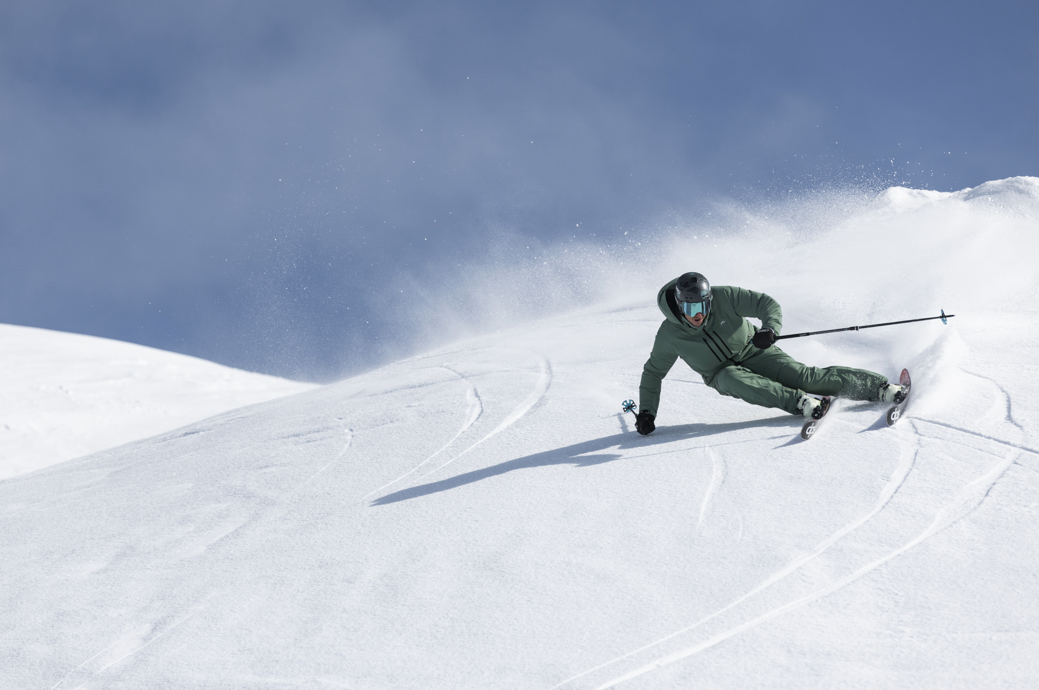
A: The angle of Ted’s inside upper leg (visually, his knee is in his chest) is like he’s doing a really deep pistol squat, and he doesn’t lose his body positioning in that. That is so key to his success. As he goes faster, he’s able to maintain his positioning and adapt it so accurately. He has great strength and mobility and doesn’t get freaked out by speed.
I don’t have the mobility to bend my knee like that. If you don’t have that mobility, your legs don’t get that huge leg length difference or long leg/short leg. In racing and in PSIA, we use that term, and if you have too much long leg/short leg, you’ll fall over without enough speed. If you don’t do enough, you won’t get much edge angle.
Q: What specifically, can we learn from watching Ligety?
A: Ted releases a turn sooner than most ski instructors, and he’s not constantly gaining speed as he goes. He also has more equal weight foot-to-foot than most before he releases his edges. Therefore, he’s not going faster and faster throughout the whole run: He gets up to a speed and maintains it, as close to consistent as possible. That’s speed control, and it’s one gift I wish I could give every ski instructor. Regardless of how fast the skier is, you want them to be able to turn as consistently as possible. That has huge benefits for your ability to balance.
Imagine you are on a bus and can only stand. The driver hits the accelerator, then the brake, and you’re constantly getting lurched, and you have to hold on to maintain your balance. If the driver is smooth and goes one speed, you can walk around the bus without holding on. If you can ski with one consistent speed, your balance is better because you’re not constantly lurching, and your attention is on anticipating what’s happening next. Ted’s ability to maintain momentum is so key to how he skis.
Read the rest of the feature here.