

By Rick Rauch, Training Manager, Telluride Ski and Snowboard School
The following is a case study from Telluride Ski and Snowboard School on its approach to new hire training.
At Telluride Ski & Ride School, like many others, the annual challenge is familiar: take a group of enthusiastic but inexperienced new hires and prepare them to teach confidently and competently – just in time for the holiday rush.
In the 2023-24 season, Telluride reimagined the new-hire training process entirely. Rather than rely on traditional lecture-heavy, top-down instruction, the team implemented a constraints-based learning model rooted in Ecological Dynamics – a framework that emphasizes learning through exploration, problem-solving, and adapting to real-world contexts.
From Firehose to Framework: Empowering Instructors to Build Their Own Progressions
The concept was simple but powerful: Instead of handing new instructors pre-made lesson plans, Telluride challenged them to create their own progressions, guided by clear objectives, available resources, and a set of “imperatives” (non-negotiable safety and operational standards).
Mission Challenge Example (Children’s Version)
Objective: Safely guide students from the magic carpet to the bottom of Chair #1.
Key Imperatives:
- Safety: Students must control speed and direction at their own pace and stay clear of others.
- Comfort: Many young students are anxious or missing parents; build trust.
- Adaptation: Equipment feels awkward; progress gradually.
- Focus: Teach one skill at a time.
- Balance: Introduce gliding and platform awareness.
- Body Awareness: Kids have large heads, making balance tricky.
- Simplicity: Avoid complex reasoning; attention spans are short.
For adult instructors, the focus shifted to gear setup, stance, and terrain choice, but the same mission-driven approach applied.
Training Design and Daily Flow
Training spanned six days, Saturday to Friday, with Tuesday as a rest day. The class included 45 new hires.
Day 1: Orientation & Foundations
- Initial on-snow warm-up focusing on early season safety.
- Icebreakers led by a NOLS-trained guide built psychological safety.
- Trainers joined activities, modeling approachability.
- Intro to PSIA-AASI fundamentals: stance, bending/tipping/turning equipment.
- End-of-day challenge issued (“Mission” flyer) outlining objectives and imperatives.
Day 2: Environment Familiarization
- Children’s Track: Began in Children’s Center, role-playing student intake, exploring props and tools.
- Walk-through of routes and outdoor learning areas.
- Adult Track: Began directly on terrain, exploring safe progressions and ideal practice zones.
Days 3 to 6: Facilitated Progression Building
- Trainers adopted facilitator roles (“guide at the side”), prompting reflection and peer discussion.
- Groups collaboratively developed progressions to meet mission objectives.
- Trainers provided gentle course corrections ensuring imperatives were honored.
- Supplemental sessions on logistics: breaks, lunch, parent communication.
- Daily debriefs reinforced learning and reflection.
- By Day 6, trainees had built their own teaching progressions and practiced them in real environments.
Building Trust and Engagement
Groups of 5 to 6 trainees remained together all week, fostering consistency and trust. Trainers participated as peers, breaking down hierarchies and encouraging open dialogue.
The collaborative, problem-solving model ensured high engagement – trainees stayed focused, motivated, and accountable.
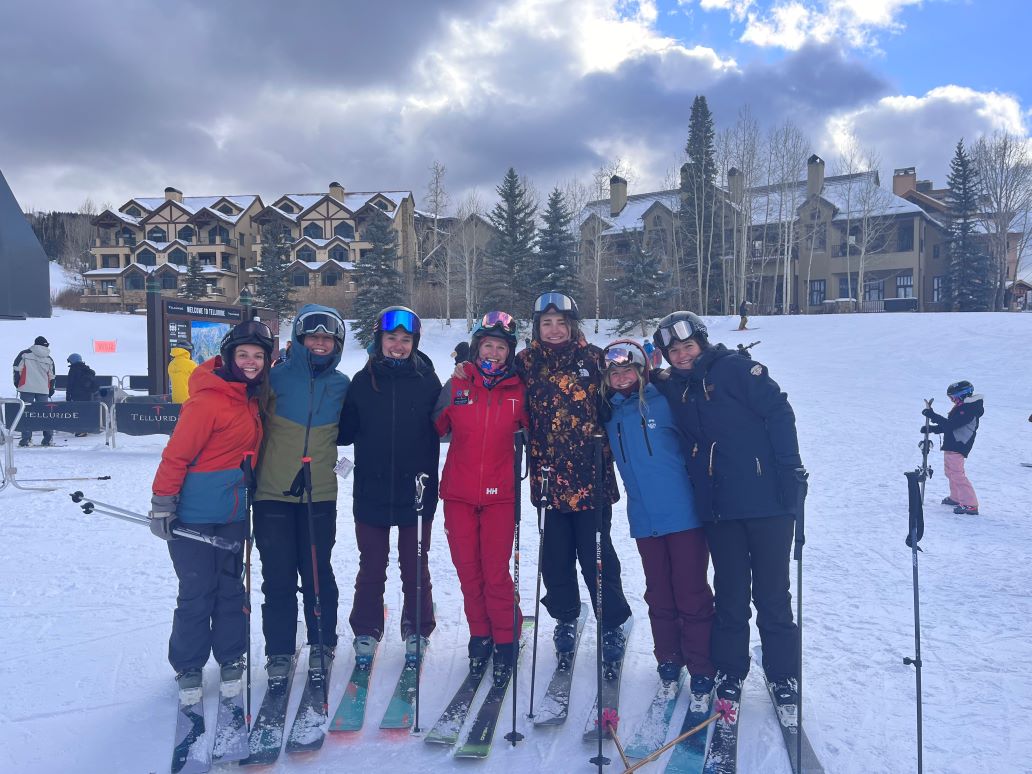
Outcomes: Confidence, Competence, and Retention
After completing training:
- Instructors shadowed and were shadowed for a few days.
- They entered the holiday rush energized and confident, not exhausted.
- Trainers and managers noted marked improvements in readiness, adaptability, and decision-making.
Measured Results:
- 58 certifications (Level I + CS1) from 45 trainees.
- 74% retention into the following season.
Takeaways for Training Leaders
Traditional training often feels like “drinking from a fire hose.” Telluride’s shift to a constraints-based model transformed the experience:
- From compliance to engagement.
- From memorization to self-directed learning.
- From exhaustion to empowerment.
By trusting trainees to design their own process within structured parameters, the program developed confident, creative, and capable instructors.
Challenge your own training staff: facilitate exploration, trust the process, and watch engagement and outcomes rise.
“The changes in our approach to training new instructors can best be described as the difference between cooks and chefs. Instead of being given a recipe to follow, our staff have learned to observe and think. They have become collaborative, creative problem solvers developing unique and inspiring teaching scenarios.”
– Tom Newell, Children’s Ski and Snowboard School Manager (retired)
For more on fall instructor training, check out the three-part First Chair Podcast series “Why Fall Instructor Training Matters”: Part 1, Part 2, Part 3
For more on new hire training, check out this article: The Real and Ideal in New Hire Training