

By Angelo Ross, PSIA-AASI Education Development Manager
Reflect on a tour you’ve been on – in a museum, on a bus, or at a historic site. Chances are it was enjoyable, informative, and worth the cost. Perhaps your tour guide was exceptional – engaging, personable, and full of fascinating tidbits.
But can you recall more than a few factoids from that experience? Chances are, while it entertained and informed you in the moment, much of that information wasn’t retained in your long-term memory. And that’s okay – most tours aren’t designed for that. They’re meant to inform and entertain, not to help you retain.
As snowsports instructors, our work is different. In fact, our job is to connect with students so we can help them move new understanding and skills from short-term novelty into lasting ability: to inform, entertain, and retain.
If you think of tours and lessons as opposite ends of a learning-environment continuum, the former are typically content- and/or guide-centered: check out a site, hear the facts, move on to the next stop. The information flow is linear and one-way, from guide to guests. The guide presents, the audience receives. Audience engagement likely begins and ends with “Does anyone have any questions?”
That’s not a knock on tours or presenting – it’s a perfectly appropriate approach in the right setting. But our lessons are built on something deeper and more dynamic.
Snowsports Lessons Are Anything but Linear
While some students may come to us with no expectation of lasting learning – simply wanting to check “sliding on snow” off their bucket list – most are hoping for something more permanent: the ability to keep up with friends and family; new ways to engage with the mountain or sport; the challenge and accomplishment of mastering challenging terrain like bumps, park, or steeps and trees; or even to become exceptional snowsports instructors.
Our responsibility is to discover their “why,” collaborate (“work together”) with them, and help them achieve their goals. Those aren’t boxes most tour guides aim to check, but it’s central to what certified professional educators do.
Compared to teaching, presenting is simpler and more linear because teaching happens in a student–teacher partnership built on best practices in interpersonal and intrapersonal skills, pedagogy, and technical understanding and performance. Because the stakes are higher in teaching than in presenting, motivation, enthusiasm, and trust can ebb and flow throughout a lesson. Our job is to create student-centered learning environments where learning is most likely to stick.
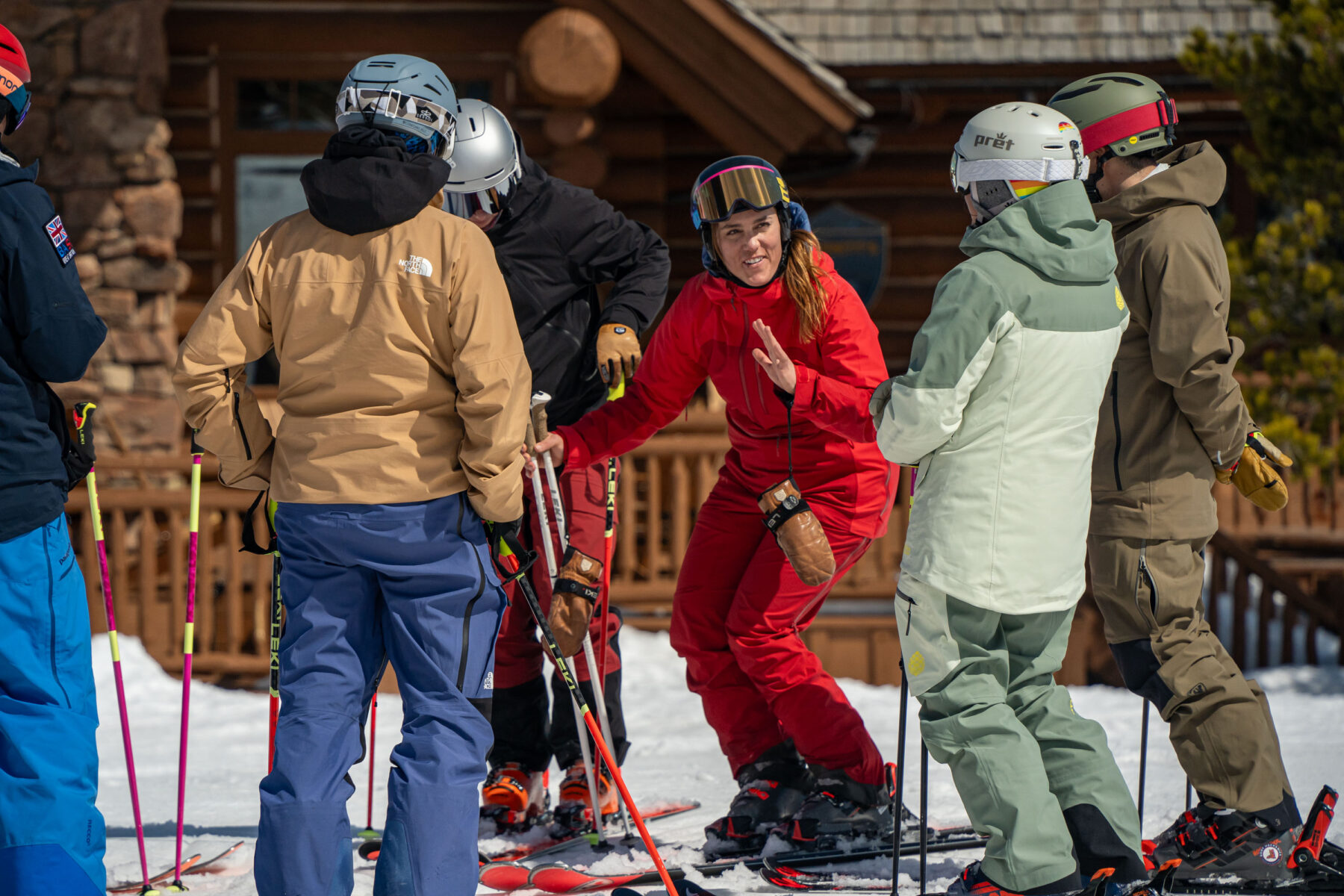
The learning process starts when learners perceive something new through their senses. At first, this ephemera lives in short-term or working memory – at the cognitive stage of skill acquisition – at risk of being forgotten (check out “The Motor Skill Learning Process,” on page 65 of the Teaching Snowsports Manual to read about stages of skill acquisition). Through engagement, manipulation of the content, guided practice, questioning, and effort, new information is encoded (organized in the brain) and elaborated (linked to existing knowledge), so it moves into long-term memory (the associative stage of skill acquisition).
With ongoing and meaningful practice, skills move deeper into long-term memory and toward the autonomous stage of ownership, where performance becomes more automatic and reliable, and requires less cognitive effort. Throughout this process, we use retrieval cues to aid recall (e.g., mantras: “Tip then turn.”), build mental models for understanding, encourage metacognition (awareness and assessment of one’s own understanding), and provide opportunities for review and reflection to strengthen retention to the point where students can practice confidently without reinforcement from a teacher (self-coaching) and return later for an assessment for how their practice is paying off.
PSIA-AASI Teaching Fundamentals
The PSIA-AASI Teaching Fundamentals are our roadmap for making this transition from short-term to long-term memory possible. Collaborating on long-term goals and short-term objectives creates context and relevance, fueling meaningful encoding and elaboration. Managing information, activities, terrain selection, and pacing prevents cognitive overload, gives time for encoding and consolidation, and keeps learners in their Zone of Proximal Development, the gap between what someone can do independently and what they can achieve with support.
Promoting play, experimentation, and exploration fosters motivation, engages multiple neural pathways, and strengthens retrieval cues. Facilitating reflection helps students develop metacognition and build mental models, while adapting to the changing needs of the learner ensures tasks remain challenging yet attainable. Managing emotional and physical risk minimizes stress interference, maintains focus, and uses positive emotional states to support dopamine release, which enhances memory consolidation. [For nuanced insight into managing information for all, and particularly fearful, students read PSIA-AASI National Team alumna Mermer Blakeslee’s A Conversation with Fear.]
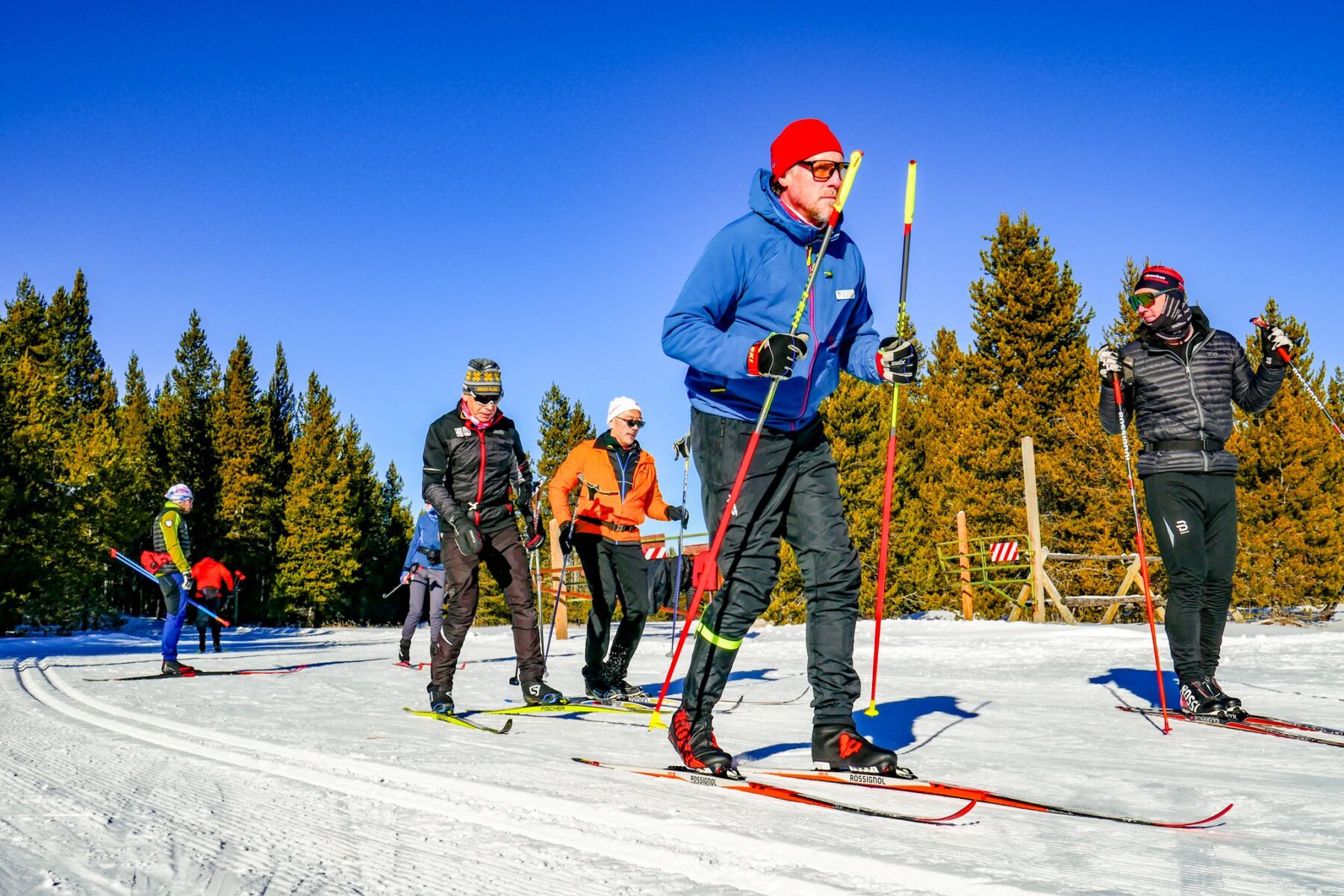
A phrase common among teachers is “meet your students where they are,” which is a fundamental difference from a tour or presentation. Tour participants meet the guide where the site is; teachers meet their students where the students are. And “are” is present tense, a moving target. Where a student is at 9:10 a.m. is not where she is at 1:47 p.m., and where she is this run is not where she’ll be during the next run, at the end of the day, or during next weekend’s lesson.
This reality requires teachers to be constantly mindful; to observe and interpret behaviors and performance (ours and our students’) in real time; to identify progress, setbacks, and diminishing returns; and to respond appropriately and immediately to keep students on the path of maximizing learning.
Professional Development and Leveling Up
What does this mean in terms of three important aspects of our membership experience in PSIA-AASI: professional development, teaching our students, and performing in assessments when we decide to level up?
Regarding professional development, this means studying, practicing with colleagues, and getting feedback on our ability to leverage best practices to create learning environments that move student understanding from fleeting toward long-term memory. On the job, it means leaning on our training to collaborate with our students and deliver the product they want, need, deserve, and paid for. In assessments, it requires ownership of these strategies so we can demonstrate them quickly and effectively with our peers and within the time constraints and pressures of the assessment environment.
If you’re considering leveling up your teaching credential and not attending clinics in which you teach and your performance is evaluated according to PSIA-AASI curriculum materials (National Standards, Performance Guides, and Assessment Forms – all of which are available on our website), my advice is to find a qualified, current trainer who can work with you that way.
The Teaching Fundamentals and the Teaching Skills Performance Guide are invaluable resources for focusing our professional development, planning and delivering lessons to our students, reflecting on our practice, and preparing to crush assessments.
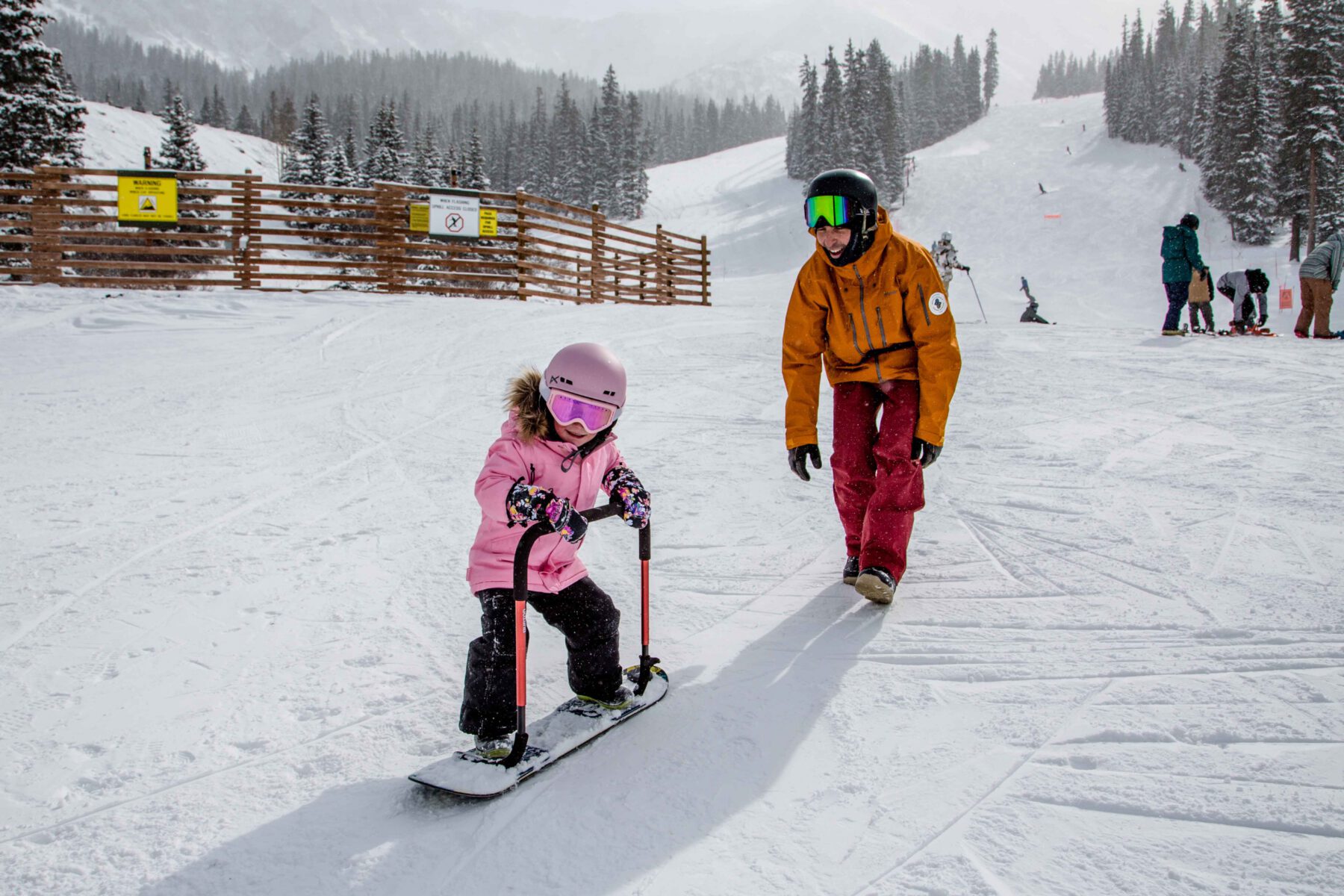
While our Teaching Fundamentals paint with broad strokes best practices in creating learning environments, the Teaching Skills Performance Guide provides myriad examples at a more granular level of successful and unsuccessful observable behaviors associated with lesson outcomes. The strength of the Performance Guides is in the specificity of observable behaviors and the structure which allows for planning training from daily clinics to season-long programs to individualized development plans for instructors. Below is an example of how behaviors are described in the Performance Guides:
Lesson Outcome (LO): Continually assess student motivations, performance, and understanding
- Successful behavior: Assess ongoing performance (body movement and ski/snowboard action) throughout the lesson.
- Unsuccessful behavior: Fail to recognize and/or adapt to individuals who have difficulty performing planned activities.
LO: Manage information, activities, terrain selection, and pacing
- Successful behavior: Provide and adapt demonstrations that match descriptions, are easily viewed, and draw individuals’ attention toward cause/effect relationships between body movements and equipment outcomes.
- Unsuccessful behavior: Miss opportunities to deliver feedback or deliver it poorly – too general, ill-timed, or irrelevant.
LO: Facilitate the learner’s ability to reflect upon experiences and sensations
- Successful behavior: Provide ample opportunity for individuals to explore and play through activities and practice to develop their own understanding of their performance.
- Unsuccessful behavior: Deliver activities strictly according to the initial plan, ignoring student performance and understanding.
As snowsports instructors, our profession is about more than the type of enjoyment one may get from taking a tour. We have the opportunity to work with our students, to learn about them, and to create experiences that help them move toward goals they may hold most dear. Teaching is a chance to change understanding, change skills, and – sometimes – change lives.