

By Phil Anderson
With Thanksgiving a few days away, Phil Anderson, a Level 3 alpine instructor, with a Children’s Specialist 1 credential, at Oregon’s Mt. Bachelor, provides an opportunity for us to reflect on how snowsports is a bridge to community and connection, regardless of one’s background. Phil lived with his family in Tehran, Iran, from 1973 to 1977.
***
The drive from Tehran to the ski resorts of the Alborz Mountains was treacherous in both winter and summer.
Summer boiled radiators. Winter iced roads. Year-round impediments included narrow lanes, hairpin turns, donkeys, and roadside shish kebab lines. In the vernacular of today, it was “sketch.”
Our driver, Mehti, steered us clear of all these obstacles and more.
Our first year in Tehran was 1973, and our winter destination was Abali, the beginner ski hill 45 minutes outside the city. Mehti would help me and my 5-year-old brother, Scott, with our ski boots, then watch us lap the Poma lift. Securing the Poma disc between my legs wasn’t so easy, and when it pulled me face-first to the snow, I did what any self-respecting 7-year-old boy would do: hang on for dear life.
After successfully navigating the ride up, I would search for someone I thought I could beat to the bottom. I found my chance of success enhanced with my intent concealed, though occasionally I caught eyes with another like-minded boy and it was, as they say, “on.” My wedge straight-runs quickly made me a legend in my own mind and the self-proclaimed “Prince of the Poma.”
“What Is Your Name”
That first year, Mehti was an easy “get” in the game of “What Is Your Name.” I credit Scott for inventing the game, which had but one rule: get a person to say “What?” and you could “get” them by reciting the victory words “What is your name!” Mehti’s linguistic limitations, combined with his likely contractual obligation to answer us, made him an easy target. We needed only say “Mehti?” to elicit his “What” and declare victoriously “What is your name!”
Scott and I got Mehti repeatedly and often throughout the better part of 1974.
In the winter of ‘75, Scott and I progressed from Abali up the Alborz range to the relatively posh and mostly treeless resort of Dizin, which lay at the base of Mt. Damavand, a 19,000-foot active volcano. Dizin was the preferred resort of the shah’s wife, the beautiful and fashionable Empress Farah, who skied in a fur hat and fur gloves and matched short turns with Billy Kidd and Suzy “Chapstick” Chaffee. And if you don’t believe me, Google it.
One afternoon, following a day of skiing moguls and hosting yard sales under the main gondola, Scott and I slumped into the back seat, and Mehti started the ignition for the drive home. Perhaps sensing our fatigue, he turned slyly toward the back seat.
“Pheel?” he asked.
I perked up and nudged Scott. “Yes?” I replied.
A few moments later, as we turned out of the parking lot, he tried again.
“Oh, Scott?”
“Mm hmm?” Scott replied, grinning my way.
Mehti knew the game: no “what,” no “what is your name.” We drove the rest of the way in guarded silence.
It wasn’t until 1977 that our dad let us ski Shemshak. Often called the “Kicking Horse of Iran” (OK, that I made up), Shemshak had the most challenging terrain of the three resorts, with road access to the summit at over 10,000 feet. My dad told many a tale of the expert-only terrain off the top of the Shemshak parking lot and the inability to take something he called a “warm-up run.”
My first time skiing Shemshak was a cold, blizzardy day, and about halfway up my dad and Mehti collaborated to get out and put chains on the tires. Once again Mehti delivered us expertly to the top and readied our gear.
Now a seasoned 11-year-old, I put my ski boots on myself and stepped into the blizzard. My dad leaned in, leveled his goggles with mine, and handed me my skis.
“If you’re old enough to ski Shemshak,” he said, “you’re old enough to carry your own skis.”
My dad led the way, stopping at what appeared to be a cliff. He looked back and head-motioned me to the precipice. I inched forward.
Behind me I heard a distant voice.
“Pheel!”
I turned, my skis scissoring in my grasp, and saw Mehti’s snowflaked mustache hanging out the driver-side window.
He hand-cupped his mouth. “Did you remember your . . .” his voice dissipating to a mumble in the wind.
Exasperated, I shouted back through the storm, “What!?”
The edges of his mustache turned up, and his voice cut through the air.
“WHAT. IS. YOUR. NAME!”
Later in 1977 we returned to Abali and rented equipment for Mehti. He was a soccer player, with the natural athleticism and mullet to prove it. I instructed him on the basics: riding the Poma, achieving the ideal tuck position, getting max air. Scott pelted him with a snowball.
On the way home, Mehti rubbed his chin deliberatively and asked, “You know what is most difficult part of skiing?”
“What?” I asked.
“What is your name!?” he answered.
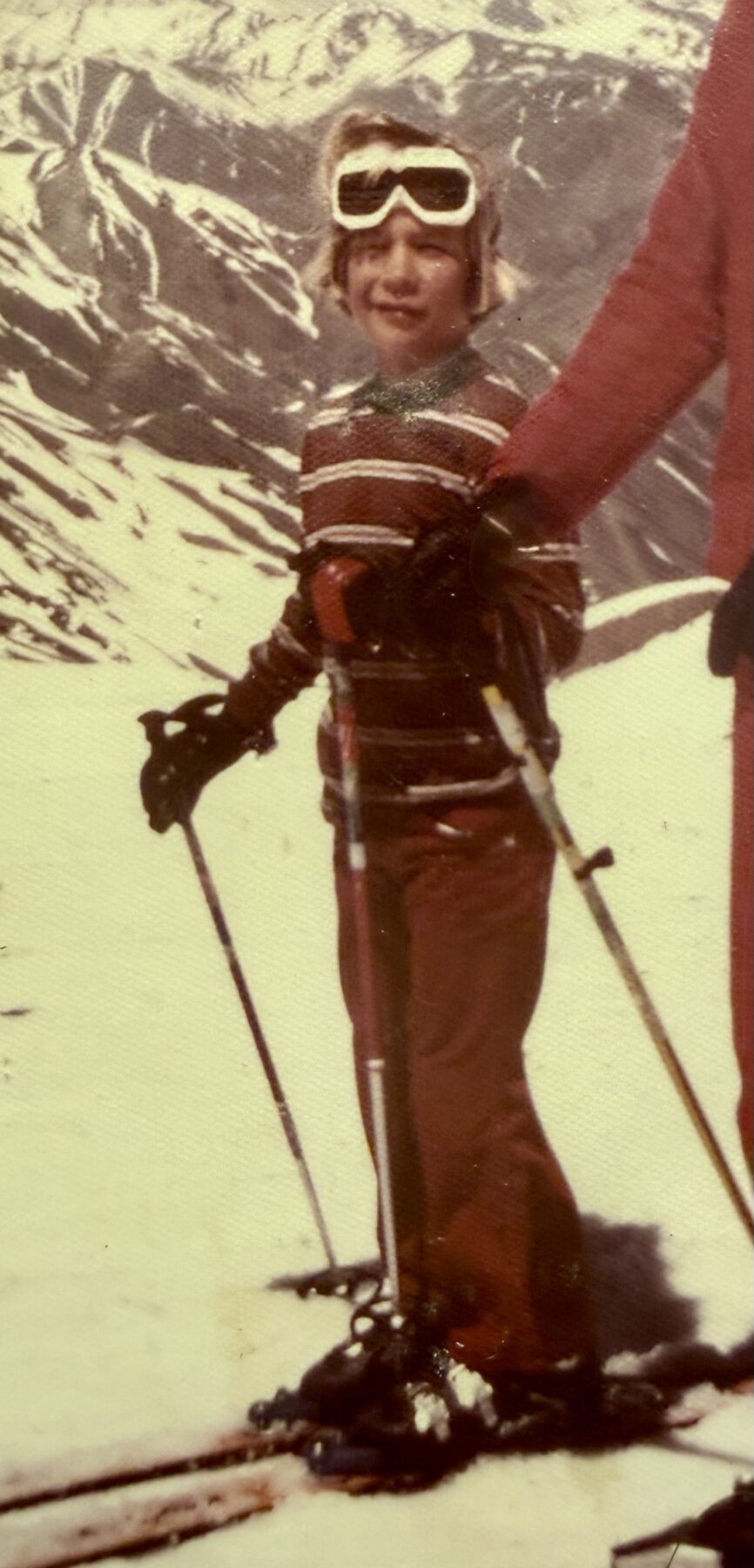
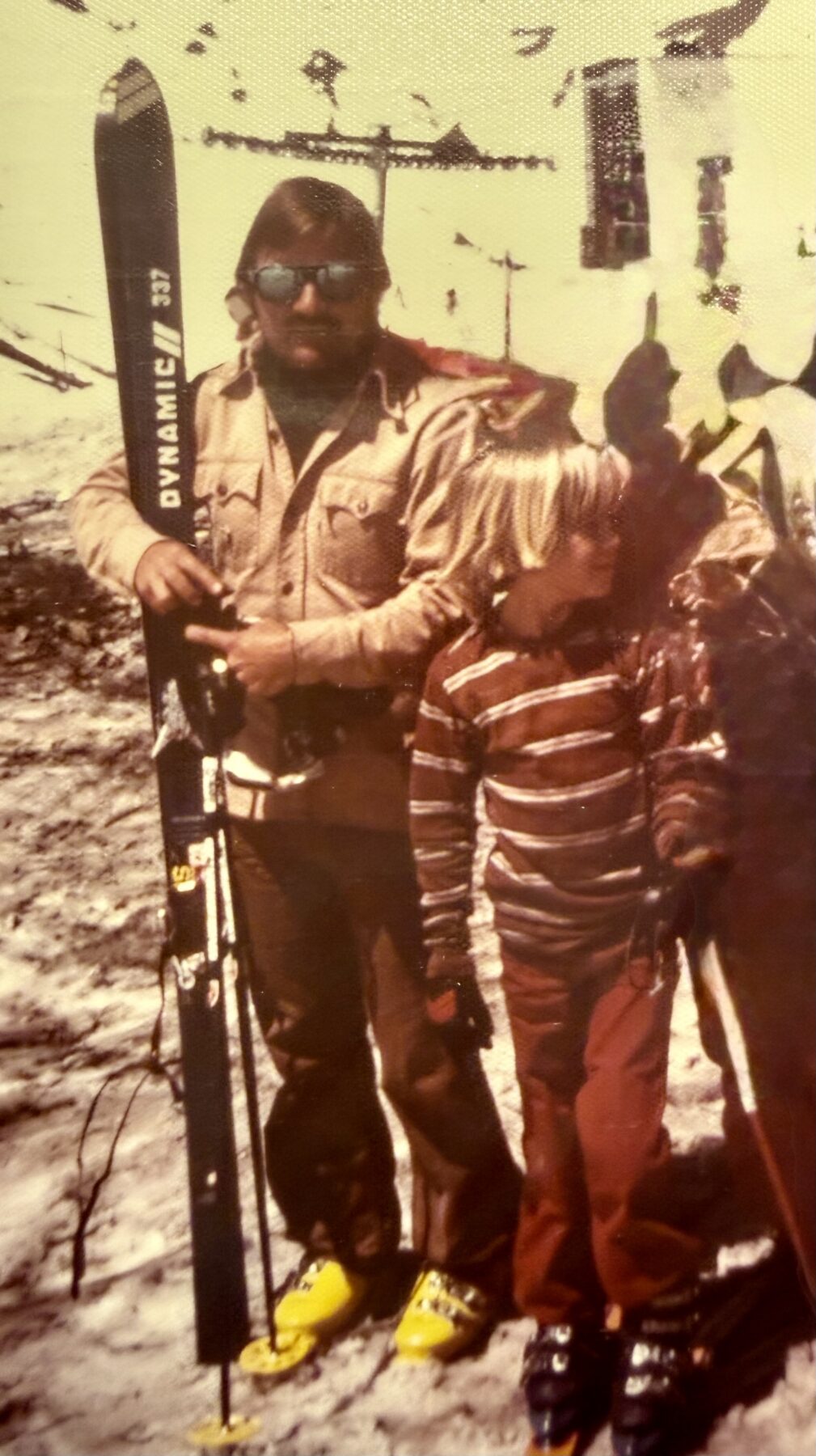
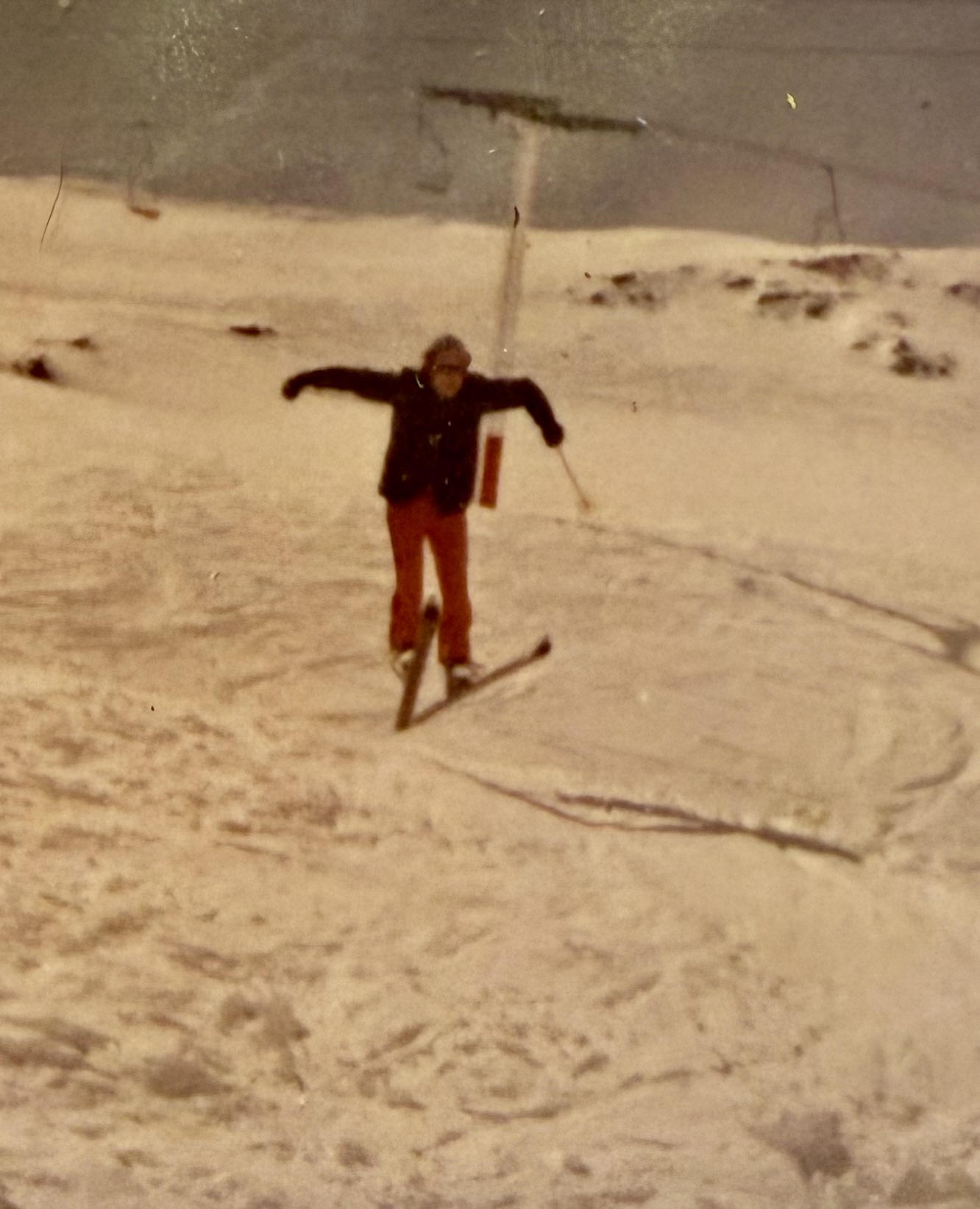
Left to right: the author, the author with his dad, and Mehti getting sick air before probably introducing his rear end to the snow.
The Connections We Make
It’s been 49 years since we left Iran, and when I look back on the years I spent learning to ski in the Alborz Mountains and the friendship my brother and I formed with Mehti, I’m reminded of all the connections I’ve formed as a snowsports professional. The 90-year-old guy taking his Level 2 for the third time. The 18-year old from Georgia who traveled west with a backpack and a snowboard. The once-shy girl from multi-weeks who recognized me downtown and shouted “Coach Phil!” What an incredible bridge snowsports provides, a bridge to a community of disparate backgrounds, opinions, preferences, ages, and origins, whose only criterion for admission is a love of sliding on snow.
Someday I’ll go back to Tehran, and I’ll look for Mehti. He’d be in his 70s, if he survived the label of American sympathizer and the countless other lethal obstacles of the Ayatollahs’ brutal theocracy.
I’ll track him down and catch him by surprise.
“Mehti!”
I’d like to think he’d recognize me and reply unguardedly.
“What?”
And I’d get him, one last time.