

By Josh Smith, PSIA-AASI National Team member
This is an excerpt from an article published in the Spring 2026 Issue of 32 Degrees. To access the full issue, click here.
Movement Analysis (MA) is often described as a technical skill to dissect turns, identify movements, and prescribe drills. When practiced with its full potential, MA becomes something far more powerful. It becomes an engine for trust, empowerment, and meaningful learning. It transforms a lesson from correction into connection. More than anything else we do as instructors, MA allows us to truly see the people we are working with, not just how they move, but how they feel, where they are stretching, and what they are ready for next.
At its core, MA is not a hunt for flaws. It is the art of noticing. Noticing how students adapt to terrain, how equipment responds to intent, and how confidence or hesitation shows up in their skiing or riding. When we approach movement this way, with curiosity and presence rather than judgment, students do not just learn. They grow.
MOVEMENT ANALYSIS IS RELATIONAL
The real purpose of movement analysis is simple. It is a way of saying to a student, “I see you, I understand you, and I am here to help you move forward.” While MA certainly helps us assess skills, understand stages of motor learning, observe how new movements integrate, and recognize confidence or readiness, its deeper purpose is relational. It helps us build trust, highlight strengths, and create a learning environment where students feel safe to experiment. You do not need slow-motion video or biomechanics charts to make this happen. You simply need attention, curiosity, and a willingness to see the whole person as they move over snow. The body tells a story. The equipment adds detail. The snow records the truth.
Trust often develops in real time, and movement analysis can be the spark that turns passive trust into real buy-in. I recently worked with a student who had some default trust in me as the instructor, but not much personal buy-in. On our first run through the park, they ignored the warm-up parameters and did what they wanted. This made it clear to me that we hadn’t established trust or shared goals.
We paused and narrowed the session’s focus to frontside spins on jumps. With that clear goal, I used targeted MA to point out the cause of their heavy pre-spin and offered simple adjustments to clean up the takeoff. When those changes immediately improved the trick, the student saw the value of the feedback. That progress built real trust, and from there the session took off.
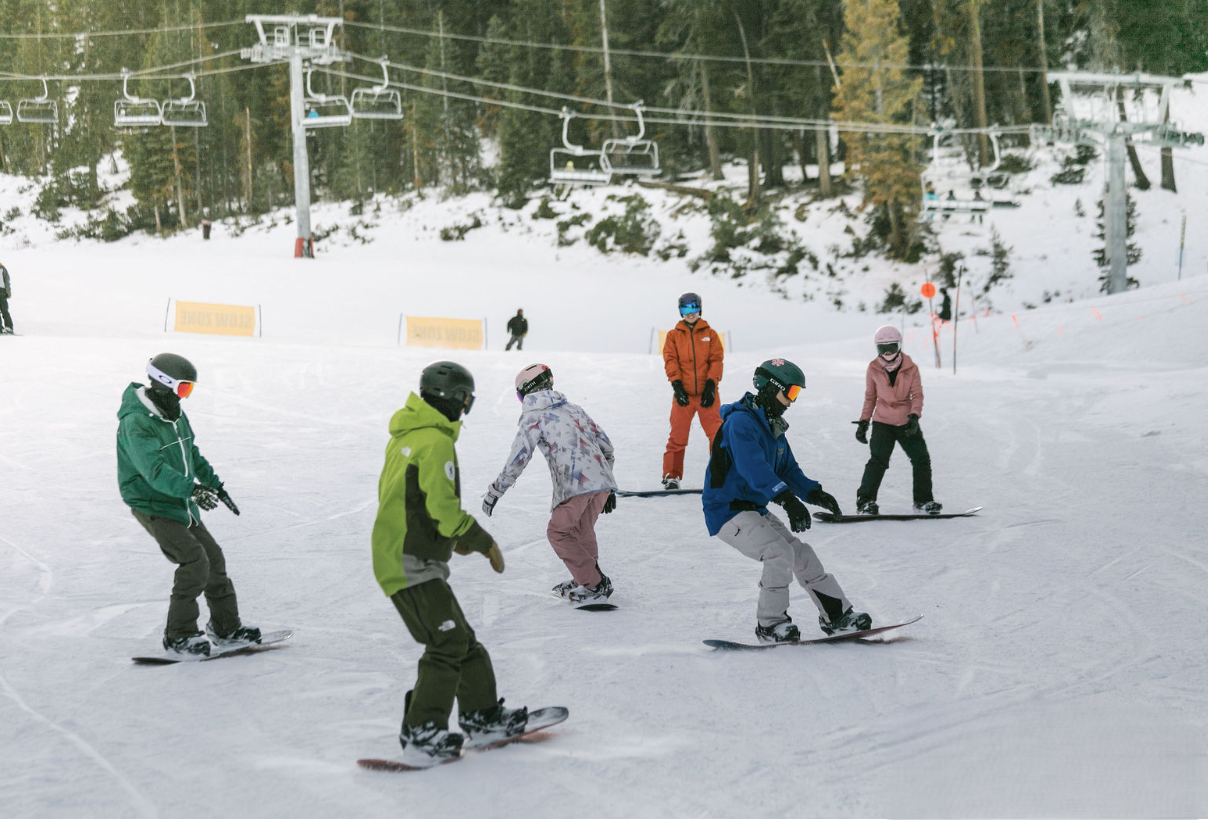
THE POWER OF OBSERVATION AND POSITIVE REINFORCEMENT
Observation is the foundation of all effective MA. The more precise and neutral our observations are, the more useful and empowering our guidance becomes. When watching a skier or rider, we note their stance, posture, and functional alignment from ankles to torso, along with any asymmetries or patterns of dominance. We see how they balance over their equipment, whether they brace or stay centered, and whether pressure builds progressively or abruptly. We observe the sequencing of joints, the timing and rhythm of turns, and whether movements blend smoothly or look segmented. We notice how the equipment bends, grips, drifts, or carves; what the track shape reveals about turn mechanics; and how the snow reacts to their intent.
True observation is not only about mechanics. Every student projects an emotional story through movement. Confidence appears in stance, power, or finesse, while caution reveals itself in pace, bracing, or defensive patterns. A turn shape can express ambition, and terrain choice can reflect readiness. The snow shows what happened. The body language shows how it felt. The real mastery of MA comes from integrating both perspectives.
Positive reinforcement shapes learning just as much as technical feedback. I’ve worked with several people who were skilled but extremely self-critical. To keep them from shutting down, I shifted the lesson toward highlighting a specific success each lap, followed by one manageable cue. Their confidence grew quickly. As they relaxed, their movements became more fluid, and they began trying variations they had previously avoided. A steady mix of encouragement and focused cues created an environment where they felt safe progressing.
Read the rest of the article here.